Homebuyer guide
Homebuyer survey structural movement: what to do
When a homebuyer survey flags structural movement, the sale does not have to stop. Find out what further investigation involves, who arranges it, and how it affects the purchase timetable.

What structural movement means on a homebuyer survey
A homebuyer survey notes visible defects without diagnosing their cause. When the surveyor writes that movement was noted in the survey, they are recording cracks or distortion they can see, not confirming subsidence. The phrase covers seasonal expansion of clay, old settlement that stopped years ago, and active ground failure alike.
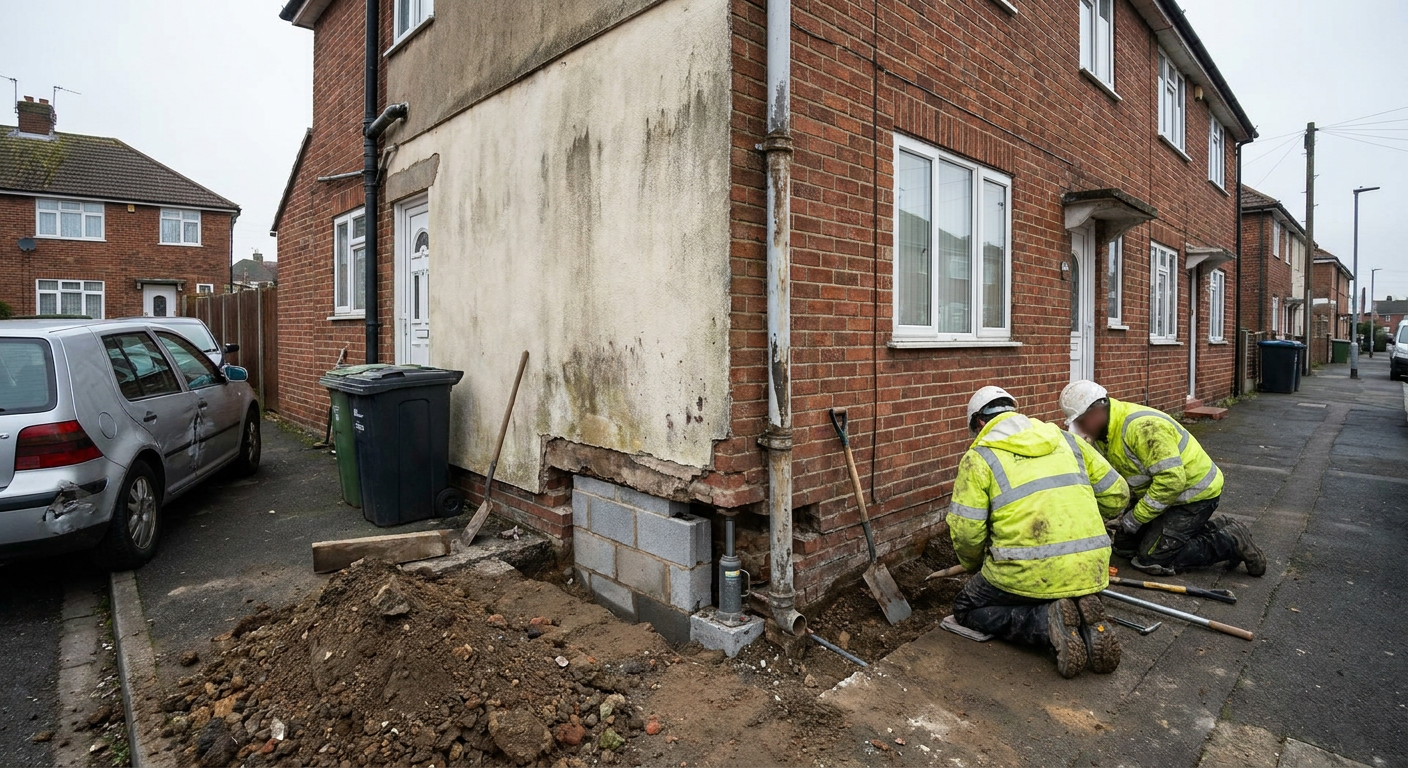
Buying a house with cracks in Huddersfield often starts with this single line in a report. It usually prompts the surveyor to recommend a structural engineer or a specialist firm carry out further investigation. That recommendation is standard practice when the pattern of cracking falls outside normal thermal movement. It does not mean the house is failing. It means the generalist surveyor needs someone with specific ground and foundation knowledge to look closer at the building.
What a specialist report settles
A general homebuyer survey records symptoms. A specialist subsidence survey establishes the cause, the extent, and whether the movement is ongoing. The resulting report tells you if the foundations need underpinning, if a drain leak softened the soil, or if the cracks are simply old plaster shrinkage from decades past.
For a buyer, this distinction matters because it determines what happens next. If the specialist finds historic movement that has long since stopped, the house may need nothing more than cosmetic crack repair. If the ground is still shifting, the report will set out options such as mass concrete underpinning, mini piled foundations for tight access, or resin injection to stabilise the soil beneath the footings.
Lenders rely on this level of detail. A mortgage valuation might flag a concern, but the specialist report provides the evidence a bank needs to release funds or decide on a mortgage retention until subsidence work is complete.
Timetables and renegotiating the price
Commissioning a structural report before exchange adds time to the conveyancing process. In Huddersfield, arranging the visit and receiving the written findings typically takes two to four weeks, depending on how quickly the specialist firm can attend and how complex the site is.
Buyers often ask whether they should renegotiate the price immediately or wait for the report first. Waiting is usually the better course. Renegotiating based on a vague warning risks losing the house over a problem that turns out to be minor. Once the specialist has visited, both sides have facts to work from. If major foundation repair is needed, the cost of that work becomes part of the negotiation. If the movement is historic, the original asking price stands on firmer ground.
Sellers face a similar question about whether to investigate before marketing. Having a report ready removes uncertainty for buyers and prevents the sale stalling later. But there is no legal requirement to do so.
Who pays and what lenders require
The buyer normally commissions and pays for the specialist investigation, since they are the one who needs the reassurance before committing to the purchase. Sometimes a seller will arrange their own report to speed things up, particularly if several buyers have already pulled out after seeing the same warning.
Mortgage lenders take movement mentions seriously. A bank will rarely refuse a mortgage outright just because a survey used the word movement. What they will do is pause the application until a specialist confirms the structure is sound or sets out a plan to make it sound. If underpinning is required, the lender may hold back a portion of the loan, releasing it only once the contractor finishes the work and building control signs it off.
Historic movement presents fewer hurdles. Insurers want to know if a house has been underpinned, but a property with old, stable cracks that were properly repaired is generally insurable at standard rates.
Signs of movement a surveyor will record
Surveyors walk through a home looking for patterns that suggest the walls or floors have shifted. These signs prompt further investigation rather than an immediate diagnosis.
- 1
Stepped cracks in brickwork
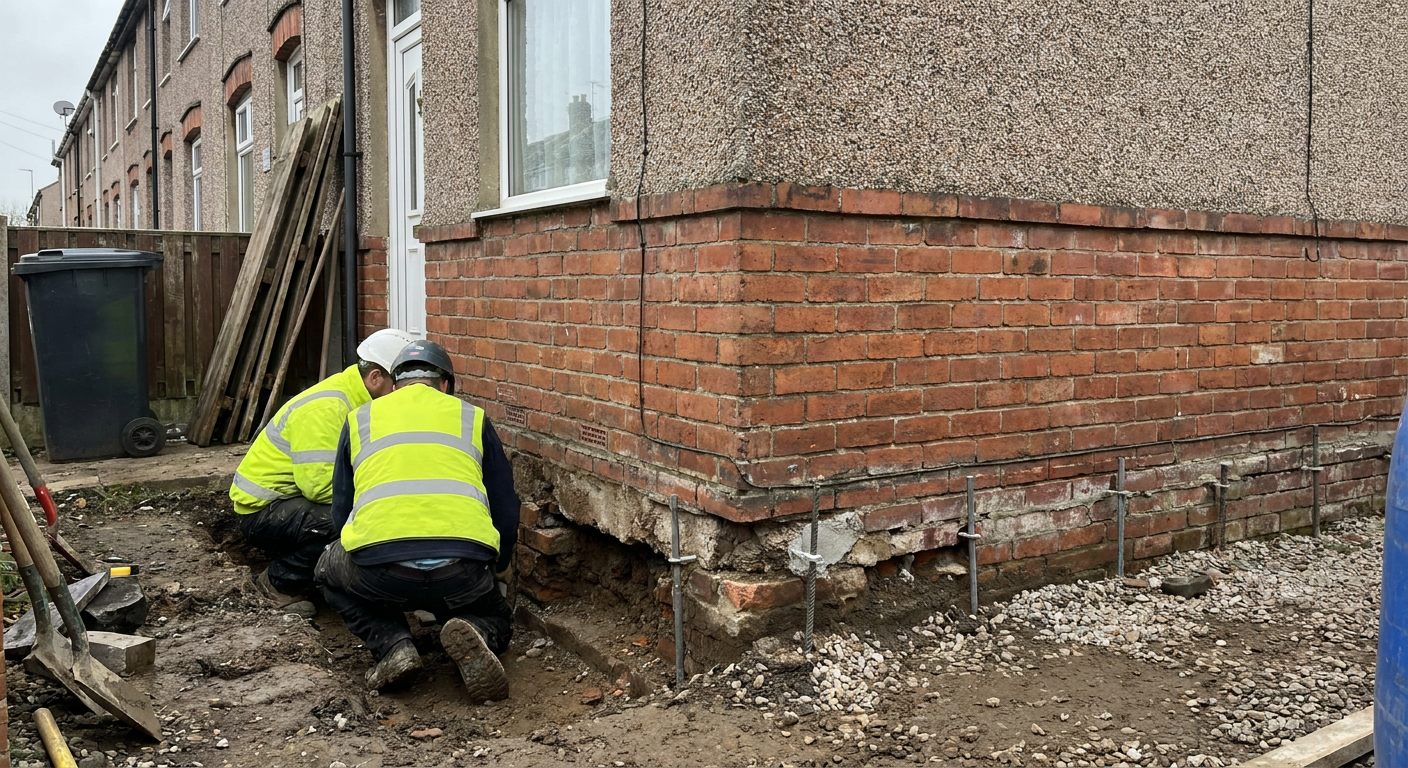
Cracks following mortar joints in a staircase pattern often point to foundation movement, though old settlement leaves identical marks.
- 2
Doors sticking in frames
A door that jams at the top corner suggests the frame has distorted, which can happen when the wall around it shifts.
- 3
Sloping upstairs floors
A noticeable slope underfoot may indicate joists deflecting or a bearing wall settling unevenly over time.

- 4
Gaps around window frames
Visible daylight between the frame and the masonry suggests the opening has widened or twisted since it was built.
What shapes the cost of further investigation
Every house sits on different ground and carries a different history, so the scope of the work varies from one job to the next.
The specialist firm explains the full cost of the particular job before any work is agreed.
- Access around the building
- Tight yards or shared alleyways limit where trial pits can be dug and what machinery a contractor can bring to site.
- Depth of existing foundations
- Deeper footings require more excavation to expose and assess, increasing the time spent on the initial investigation.
- Type of ground below
- Millstone grit behaves differently from clay, so the testing and monitoring methods the specialist uses will change accordingly.
- Need for monitoring equipment
- If the movement might be ongoing, installing gauges to track it over several months adds to the initial scope of work.
Ask about the movement in your survey
Send the details from your homebuyer report. The enquiry goes to a local specialist firm who will explain what the next step involves, with no obligation to proceed.
- No obligation
- Local specialists
- Clear next steps