Seasonal guide
New cracks after dry weather: what to check
A spell of hot, dry weather can leave marks on plaster and brickwork. Find out why clay soil shrinkage cracks house walls across the Huddersfield valleys, when seasonal movement stops on its own, and when to ask a specialist firm to look.
Why clay shrinks under Huddersfield homes
The ground beneath the valley floors around Huddersfield holds bands of shrinkable clay. During a long dry summer that clay loses moisture and contracts, pulling away from the underside of shallow footings. Homes built on this clay are more likely to show new cracks after dry weather than those sitting on the millstone grit higher up the hillsides.
You might notice hairline lines appearing inside, often running from the corners of windows or doors toward the ceiling. Outside, late summer cracks brickwork along mortar joints, sometimes stepping diagonally up a wall. This is clay soil shrinkage at work. The ground has lost volume because it dried out, so the footing settles slightly until rain returns.
Read more about the geology beneath local homes in our notes on [millstone grit and clay ground](/news/millstone-grit-and-clay-ground-under-huddersfield-homes). A specialist surveyor checks these conditions before recommending any repair.
When cracks appear in summer and close in winter
Many people ask whether cracks that appear in summer close in winter. With shrinkable clay, they often do. Rain through autumn and winter rehydrates the soil, which swells back toward its original volume. The wall may settle back into place and the gap narrows or disappears entirely.
This pattern means the movement is seasonal rather than progressive. Seasonal cracks plaster walls inside tend to be thin, usually less than two millimetres wide, and follow the same path each year. They open in August or September and tighten by February.
But not every gap closes completely. If a crack widens beyond five millimetres, runs right through the wall, or fails to narrow when the ground gets wet again, something else may be happening. That is the point where asking a specialist firm for a [subsidence survey](/subsidence-survey-huddersfield) makes sense. Tracking movement over months tells you whether the ground is simply cycling with the seasons or dropping further each year. You can learn how to record changes yourself by [measuring a crack week by week](/what-you-can-see/measuring-a-crack).
Trees, roots and drying soil near foundations
A large tree close to a wall draws significant moisture from the ground. In a dry summer, tree roots drying soil foundations can exaggerate the normal shrinkage of clay. The area directly beneath the canopy dries faster and deeper than the rest of the garden, so one corner of a house may drop while the rest stays level.
Removing the tree seems like an obvious fix, but felling a mature tree near clay ground creates another problem. Without roots extracting water, the clay absorbs rainfall and swells. That heave pushes footings upward and causes a different kind of damage. Specialist firms consider root spread, species and soil type before advising on removal.
If you suspect a tree is involved, a [structural monitoring](/structural-monitoring-huddersfield) programme records exactly what the wall does month by month. The data shows whether the movement tracks with the seasons or follows a steady downward line.
Filling cracks and decorating before next summer
It is tempting to fill and paint over a crack as soon as it appears. But if the ground is still moving, rigid filler will split again within weeks. Decorating over fresh filler hides the evidence a surveyor needs to read the movement.
Wait until the wetter months arrive and the wall has had time to settle back. If the crack closes fully, a flexible decorator's caulk handles the slight residual movement better than hard plaster. If it stays open, the cause needs identifying first.
Specialist firms carry out [crack repair](/crack-repair-huddersfield) only after establishing why the wall moved. Filling a gap without understanding the ground beneath it wastes time and money. For wider damage to masonry, look at what [stepped cracking in brickwork](/what-you-can-see/stepped-cracks-brickwork-huddersfield) indicates about the direction of movement.
Insurers, surveys and knowing when to act
Reporting every hairline crack to a buildings insurer can trigger a claims history that affects future premiums, even if the movement turns out to be harmless seasonal shrinkage. Most insurers expect homeowners to monitor small cracks through one full wet and dry cycle before making a report. Read more about how [buildings insurance covers subsidence](/what-you-can-see/subsidence-and-your-policy) and what policies typically require.
Watch the crack for at least three months. Mark the ends with a pencil and date them, or fix tell-tales across the gap. If the crack keeps widening past the autumn rains, or if doors begin sticking because frames have twisted, call in a specialist firm.
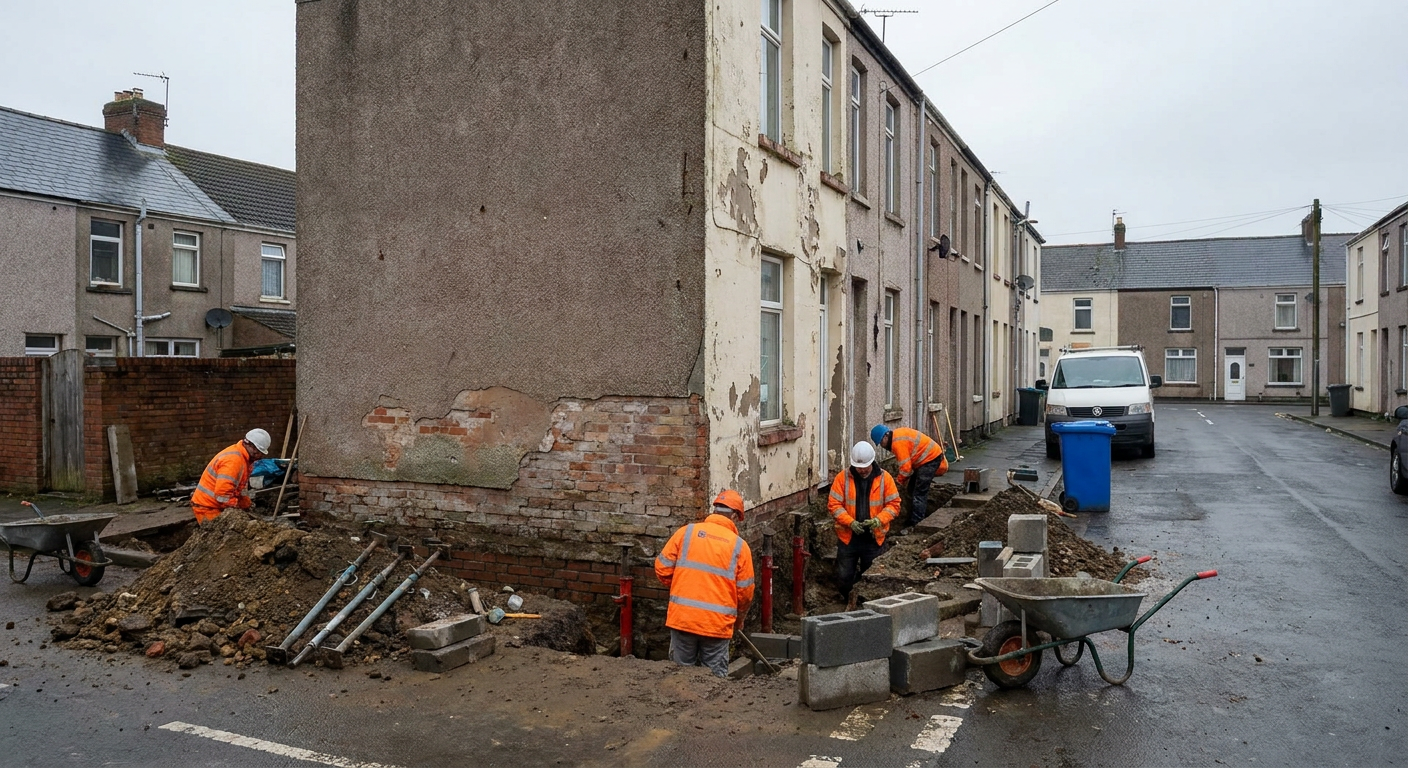
The difference between clay shrinkage and real subsidence needing underpinning comes down to direction and persistence. Seasonal movement goes back and forth. Progressive subsidence moves one way and accelerates. Where underpinning is needed, methods such as [mass concrete](/mass-concrete-underpinning-huddersfield) or [mini piled foundations](/mini-piled-underpinning-huddersfield) transfer the load below the shrinking clay layer.
Reading seasonal signs in your home
The same crack can mean different things depending on when it appeared, how wide it is, and whether it closes again when the rain returns.
- Thin line from window corner to ceiling
- Typical seasonal plaster movement caused by clay drying out. Monitor it through winter to see if it closes naturally.
- Stepped cracks outside along mortar joints
- Often points to foundation settlement on shrinkable clay during dry weather. Measuring the width over several months clarifies whether the pattern is seasonal or continuing to widen.
- Doors sticking only in late summer
- Frames distort when walls move slightly on dry ground. Check if they free up once autumn rain returns.
- Crack wider than 5mm staying open all year
- Movement may no longer be seasonal if the gap stays open through winter. A specialist survey determines whether the ground continues to drop or has stabilised naturally.
- Gaps opening between skirting and floorboards
- Floor joists can shift as supporting walls settle unevenly on drying soil. Recording the gap monthly shows whether the shift is ongoing or stops when moisture returns.
Questions about summer cracks
-
Homeowners across Huddersfield ask these when dry weather leaves marks on their walls.
- Will the cracks close in winter?
- Clay shrinkage cracks often narrow when rain returns. Progressive ones stay open or widen further.
- Is my home on shrinkable clay?
- Valley floors around Huddersfield sit on clay bands. Higher ground tends to be millstone grit.
- Could a nearby tree be the cause?
- Tree roots extract moisture from clay, worsening shrinkage locally. Removing a tree risks heave instead.
- Should I tell my insurer now?
- Most insurers prefer you to monitor seasonal cracks through one full wet and dry cycle first.
- How long should I watch a crack?
- Track it for at least three months, ideally through autumn, before calling a specialist firm.
- Is it safe to fill and decorate?
- Wait until the wall settles back. Rigid filler applied too early splits again when the ground moves.
Ask about the cracks in your home
Send details of what you have noticed. A specialist firm reviews the information and advises whether a site visit is needed. There is no obligation to proceed with any work.
- No obligation to proceed
- Local specialists respond
- Plain advice first