Guides
Signs of subsidence in a house: what to look for
Every guide on this site, gathered in one place. Read about the ground beneath your home, what cracks mean, how a specialist firm carries out underpinning, and who pays for the work.
Understanding the ground beneath your home
The soil and rock under a house determine whether it stays level or begins to move. Huddersfield sits on millstone grit and clay, and both materials behave differently when the weather changes. Clay shrinks during dry spells, pulling away from foundations, while grit can hide old workings that leave voids underground.
Read about the millstone grit and clay ground under Huddersfield homes to see why certain streets are more prone to movement than others. If your house stands near former extraction sites, old mine workings can cause sudden settlement. The guide on coal and quarry sites explains what happens when the ground below a house has been hollowed out in the past.
A subsidence survey is usually the first step after you notice a problem. A specialist firm will examine the building and the surrounding ground to find out whether the movement is active or happened years ago. That report shapes everything that follows.
Reading the signs in your walls and floors
A crack does not always mean the house is falling down, but it does need attention. Stepped cracks running through brickwork along the mortar joints follow a specific pattern. That pattern tells a structural engineer which part of the foundation has dropped and by how much.
Measuring a crack week by week gives a clear picture of whether it is growing. A mark made with a pencil and a date written beside it costs nothing and provides useful evidence later. If doors start sticking or windows refuse to close properly, the frame may have twisted because the wall around it has shifted. A door frame out of square is a common early sign of differential settlement.
Sloping floors upstairs point to movement lower down. New cracks appearing after a long dry summer often indicate clay shrinkage rather than a structural failure. Each of these symptoms has its own guide here, written to help you decide whether to call a specialist firm or simply keep watching the wall.
How underpinning stabilises a house
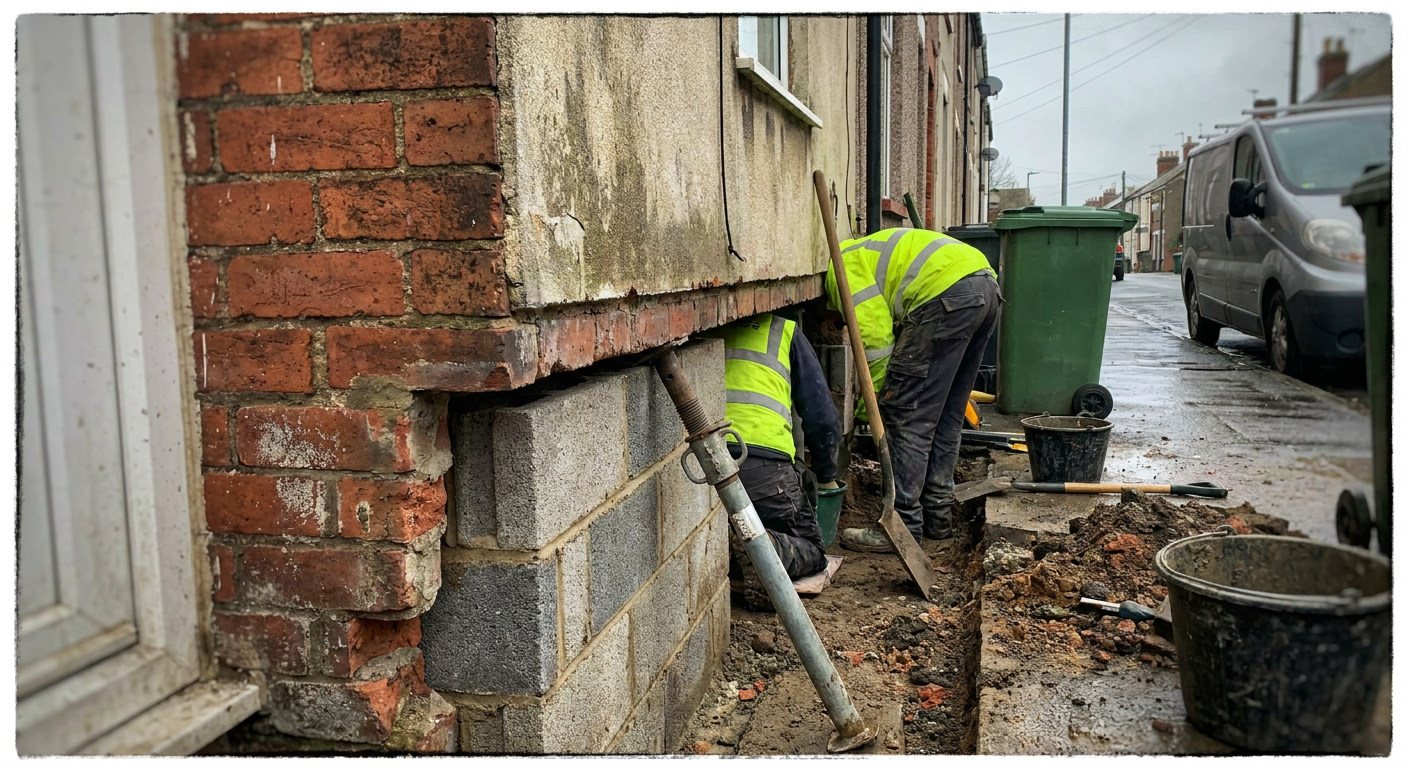
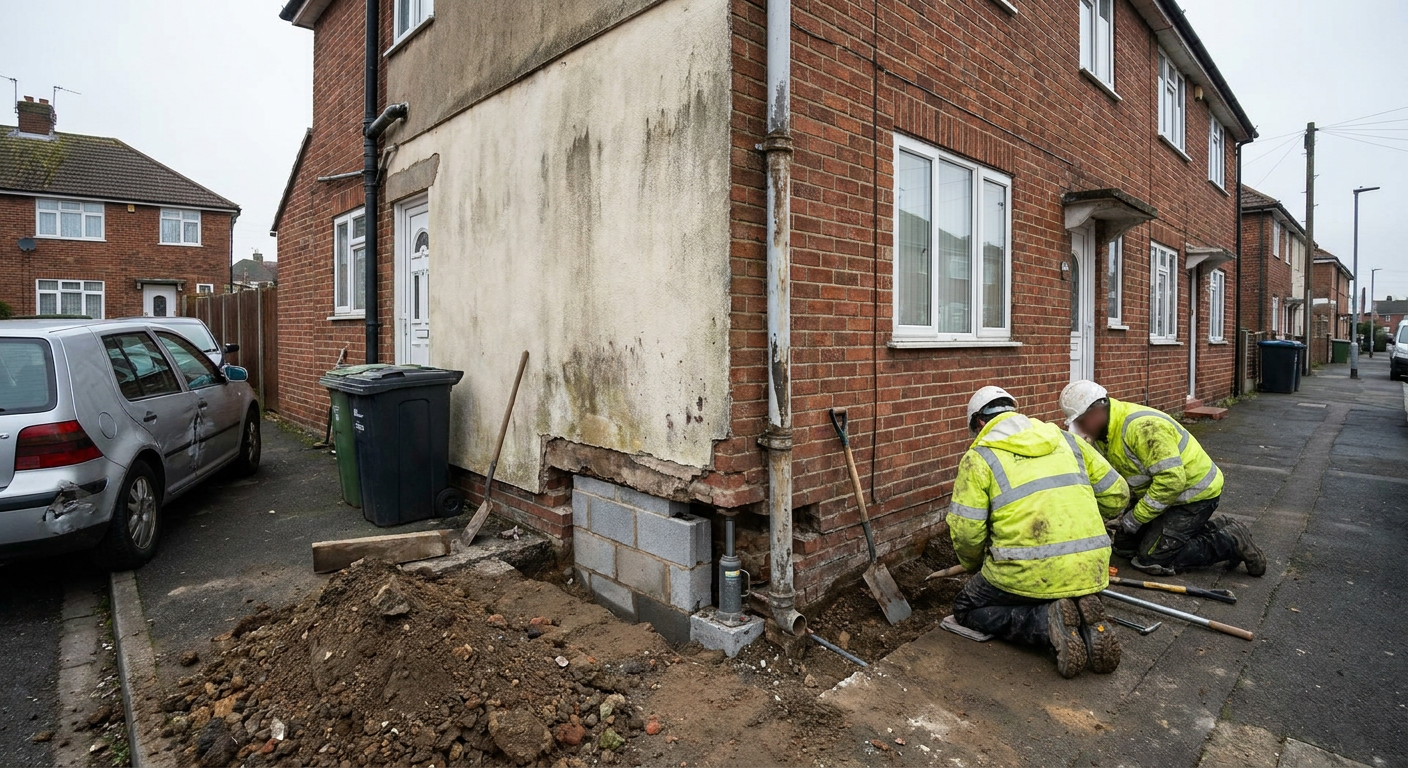
Underpinning means extending the foundation deeper into stable ground so the house stops moving. Several methods exist, and the right one depends on access, soil type, and how far down the firm must go to reach solid strata.
Mass concrete underpinning involves digging sections beneath the existing footing and filling them with concrete in a controlled sequence. It suits houses where the stable layer is within reach of traditional excavation. Where space is tight, mini piled underpinning drives small piles through weak soil until they bear on rock or firm clay far below.
Basement underpinning lowers an existing cellar floor while strengthening the walls around it. Resin injection offers a different approach entirely: a specialist firm pumps expanding resin into the ground to compact loose soil without heavy digging. Crack repair then addresses the visible damage left behind once the structure has stopped moving.
Two guides cover pin depths and the ground conditions that dictate them. Another looks at the particular challenges of underpinning a stone built Pennine house, where thick walls and shallow original footings demand careful sequencing.
After the work is done
Stabilising a house does not end when the concrete cures or the last pile is driven. Structural monitoring tracks any residual movement over several months. Small gauges fixed across repaired cracks record whether the wall remains still through seasonal changes in temperature and rainfall.
If you plan to sell the house or remortgage it, lenders will ask questions. The guide on underpinning and mortgages sets out what a bank wants to see before it approves a loan on a previously subsided property. Building control approval is another requirement: local authority inspectors must sign off the work, and the process for gaining that approval in Huddersfield has its own page.
Foundation repair covers the broader task of fixing damaged footings, cracked masonry, and distorted floors. Choosing who carries out the work matters too. The guide on underpinning contractors explains what qualifications and insurance a specialist firm should hold before it starts digging near your home.
Paying for the repairs
Most homeowners assume their buildings insurance will cover subsidence, but policies vary widely. The guide on buildings insurance and subsidence explains what standard policies include, what they exclude, and how excess payments work when a claim is accepted.
Sometimes the cost falls outside an insurance policy altogether. A separate page explains who pays for underpinning when neighbouring trees, leaking drains, or construction work next door caused the movement. Understanding liability early prevents disputes later.
The full process from the first survey to the final decoration is mapped out in the guide on how underpinning works. It traces each stage so you know what a specialist firm will do, how long each phase takes, and when you might need to move furniture or vacate a room. For a complete view of every option available locally, the subsidence repair services page lists each method alongside the situations where it applies.
Tell us what you have noticed at your home
Send a description of the problem. It goes to someone who handles local enquiries, and writing it down does not commit you to any work or cost.
- No obligation to proceed
- Read by a local adviser
- Replies sent promptly
Signs to look for
- Stepped cracks
Stepped cracks in brickwork follow the mortar joints in a staircase pattern. Read what causes them, which ones matter most and the checks that follow.
- Measuring a crack
Measuring a crack in a wall shows whether it is getting wider over weeks. Learn where to measure, what to write down and which widths need a closer look.
- Doors and windows
A door frame out of square, a door that will not shut or a dropped window can point to foundation movement. See the checks that tell wear from subsidence.
- Sloping floors
- Dry weather cracks
New cracks after dry weather often point to clay soil shrinking under foundations. What the cracks look like, which ones matter and what comes next.
- Mine workings
Old mine workings can leave house cracks years later. How to find out if coal or quarry workings sit under your home and what checks usually follow.
- Survey findings
A homebuyer survey that flags structural movement can stall a purchase. What the wording means, which checks follow and how monitoring fits in.
- Insurance
Buildings insurance usually covers subsidence, subject to an excess. What a policy tends to include, how a claim is handled and what to gather first.
- Help and advice
Advice on cracks in walls: where they tend to appear, the patterns that matter, when to keep watching and when movement needs a closer look.