Resin injection, Huddersfield
Resin injection ground stabilisation
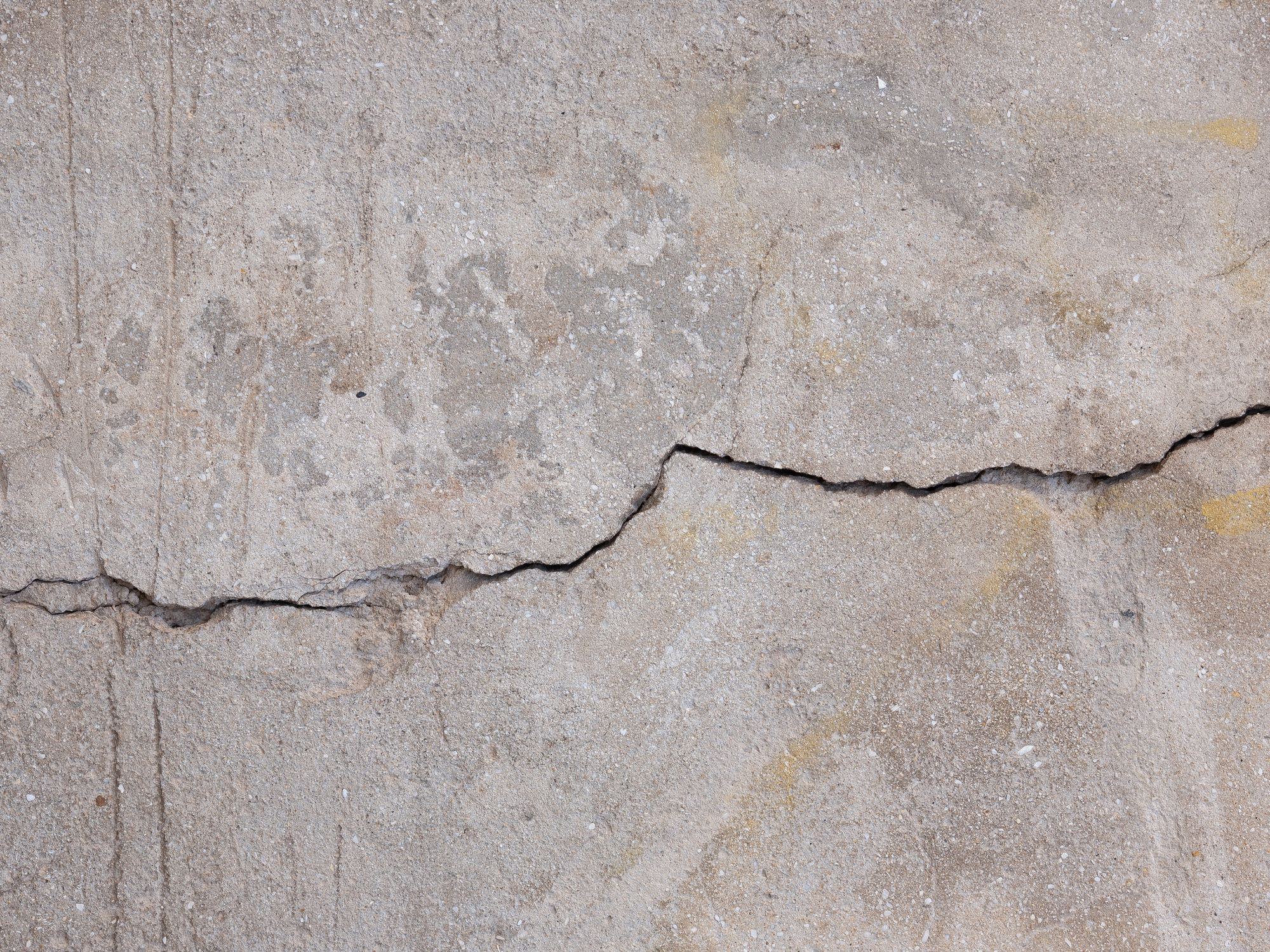
If you have noticed cracks or a sloping floor, resin injection ground stabilisation might be an alternative to underpinning your house. A soil injection specialist in Yorkshire examines the ground beneath your home and decides if geopolymer injection suits the problem.
- No need to dig up floors or gardens
- Rooms usable again quickly after work
- Suitable for stone terraced houses
Describe what you have noticed
Ground stabilisation and foundation options
Resin injection is one way to address subsidence. Depending on the ground beneath your home, a specialist may recommend this method or traditional excavation. Each approach suits different situations around Huddersfield.
-
Resin injection in Huddersfield
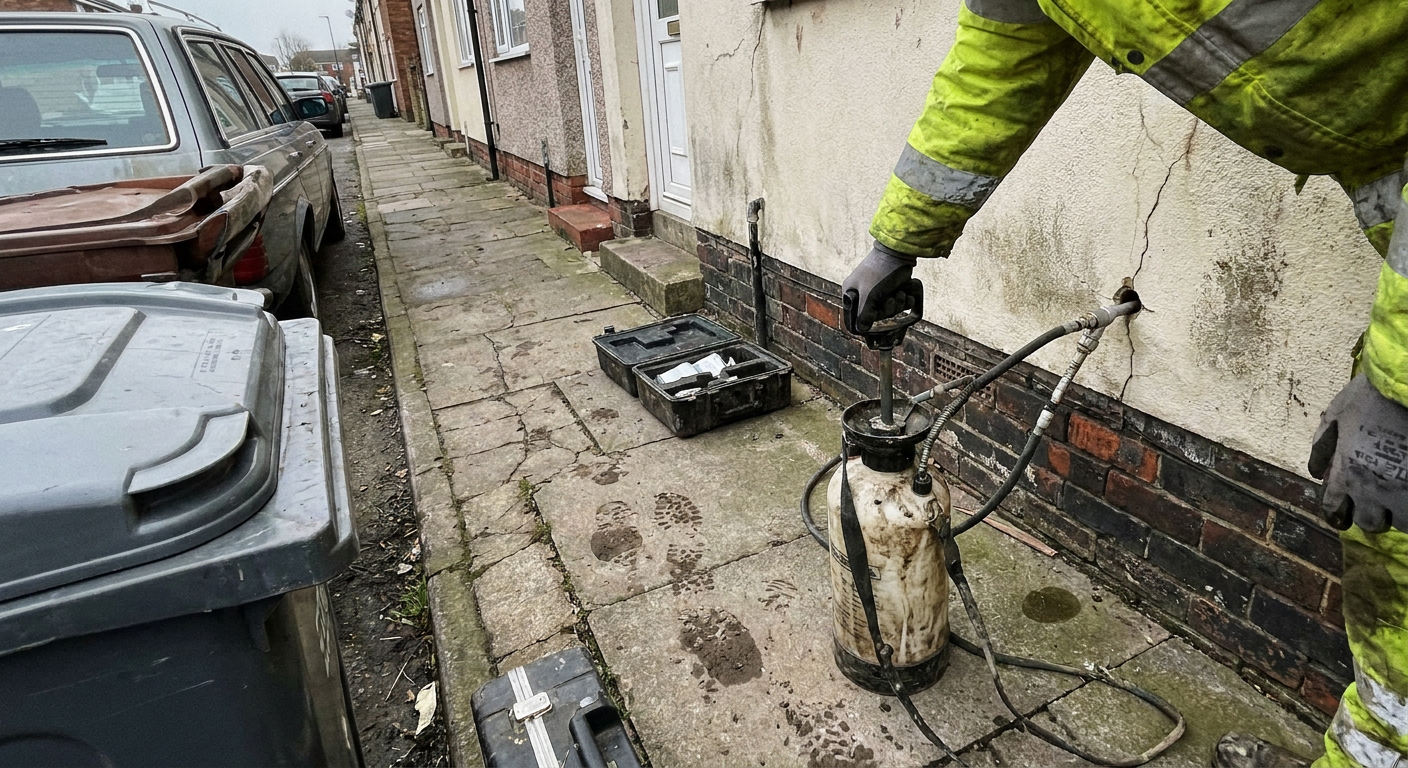
A specialist drills small holes through the floor slab or outside walls and injects expanding geopolymer resin into the voids below. The resin fills empty space and compacts loose soil. This method avoids digging trenches and usually allows you to use the rooms again the same day. It can suit older stone terraced houses as well as newer builds, provided the ground conditions allow it. You get a repair that stabilises the footing without major disruption to your home or garden.
-
Mass concrete underpinning
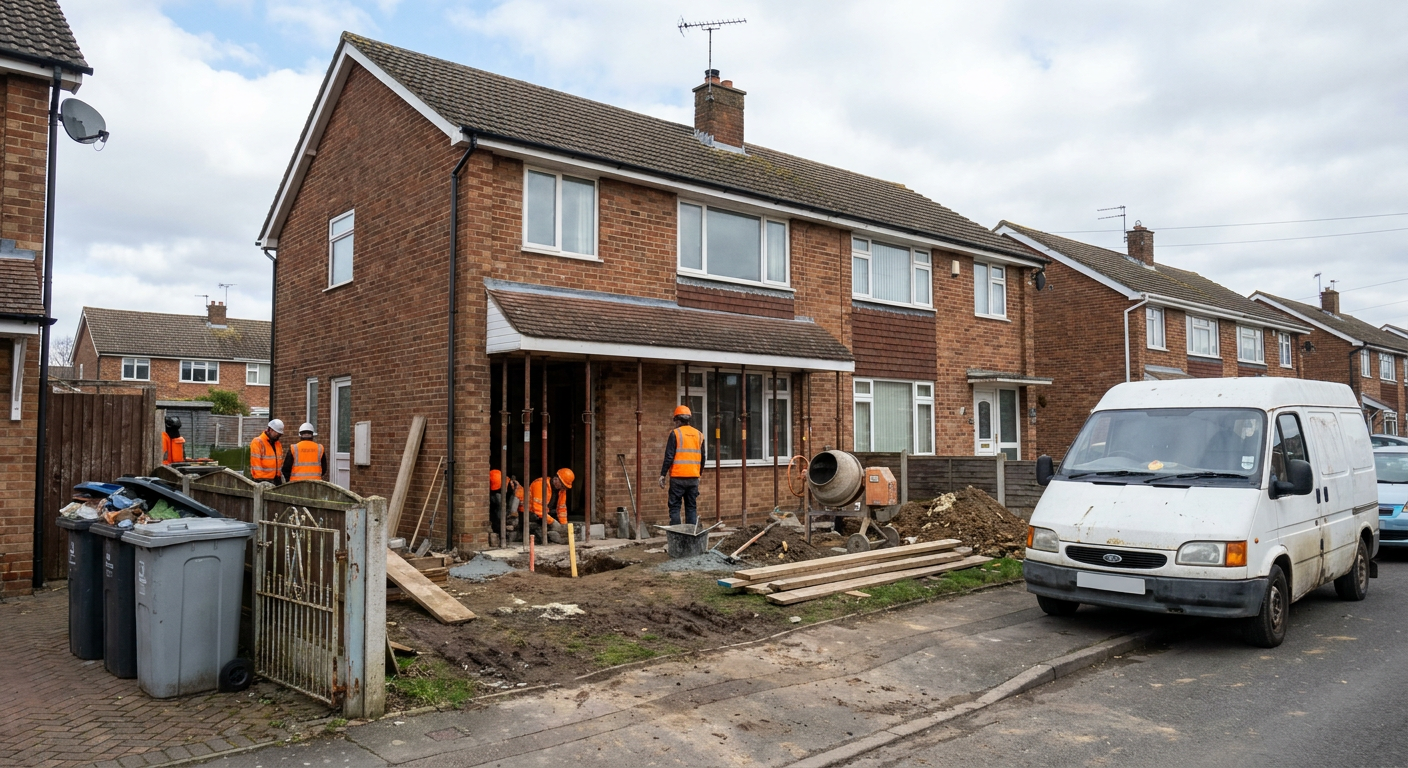
Where the ground needs deeper support, a specialist excavates sections below the existing foundations and fills them with concrete. This creates a new, wider base for the wall to rest on. The work happens in stages so the house remains supported throughout. It involves more mess than resin injection but provides substantial bearing capacity where shallow soils have failed. You get a permanent structural repair suited to heavy masonry buildings across Huddersfield.
-
Foundation repair in Huddersfield
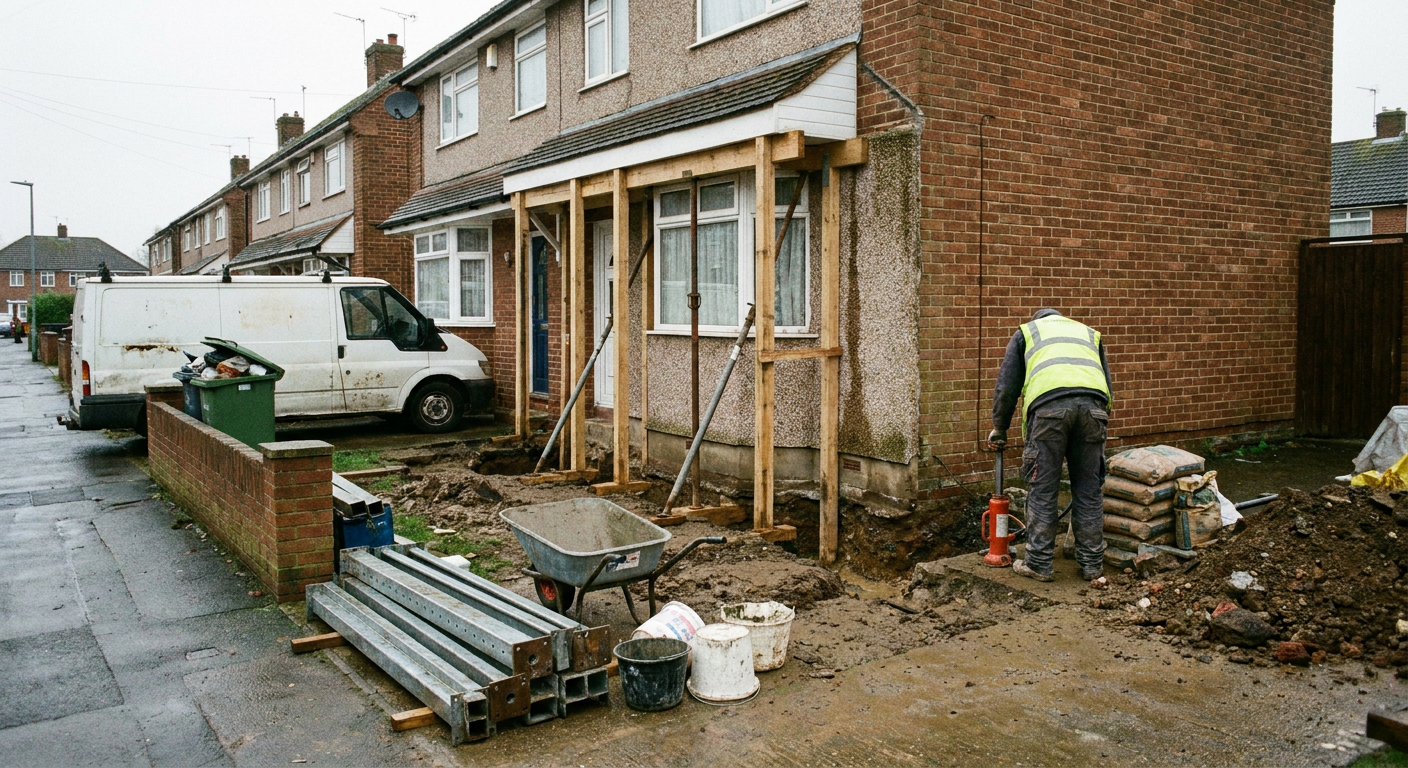
Sometimes the footings themselves are cracked or crumbling rather than just sitting on weak ground. A specialist assesses whether the damage needs localised rebuilding, crack stitching or complete replacement of a section. They check drainage, tree roots and soil type before recommending a fix. You get a clear picture of what is wrong with the base of your home and a plan to put it right, whether that involves resin, concrete or masonry repairs.
Signs your ground might be moving
Resin injection ground stabilisation fills voids and compacts loose soil beneath a home without excavation. A geopolymer resin is pumped through small drilled holes, where it expands to densify the ground and can lift settled floors back toward their original level.
- 1
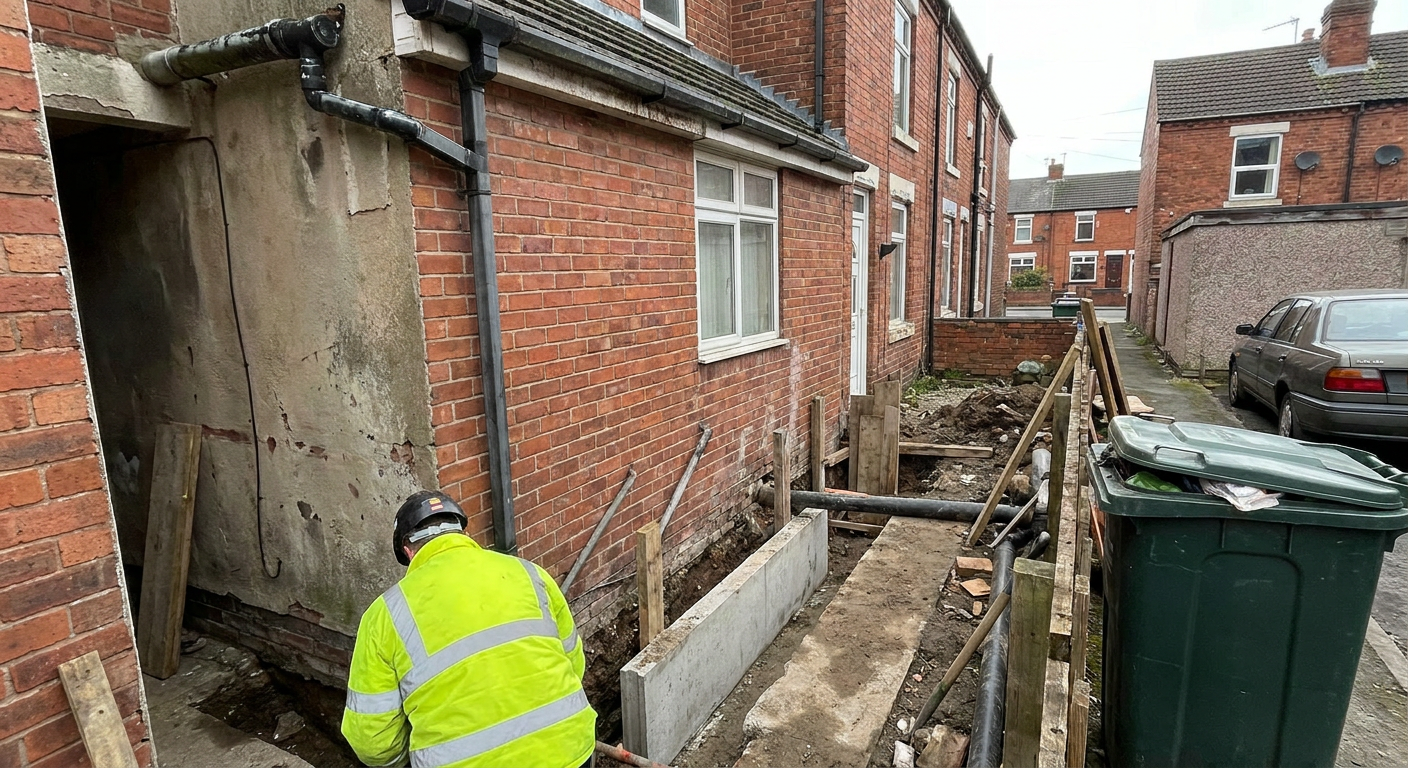
Stepped cracks in brickwork
Cracks following the mortar lines in a staircase pattern often point to one part of the wall sinking lower than the rest.
- 2
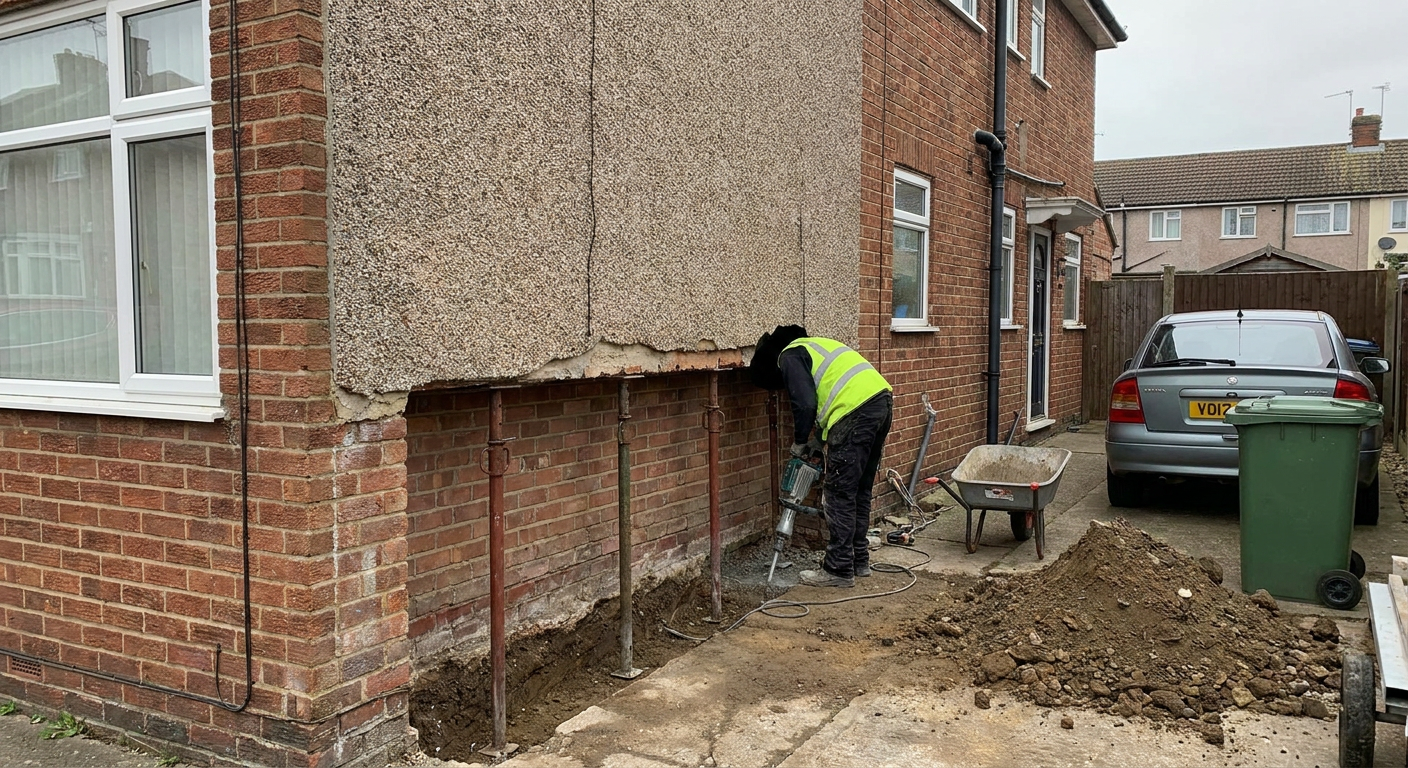
Doors and windows sticking
Frames warp when the surrounding wall shifts. Doors that used to close easily start catching on the frame or floor.
- 3
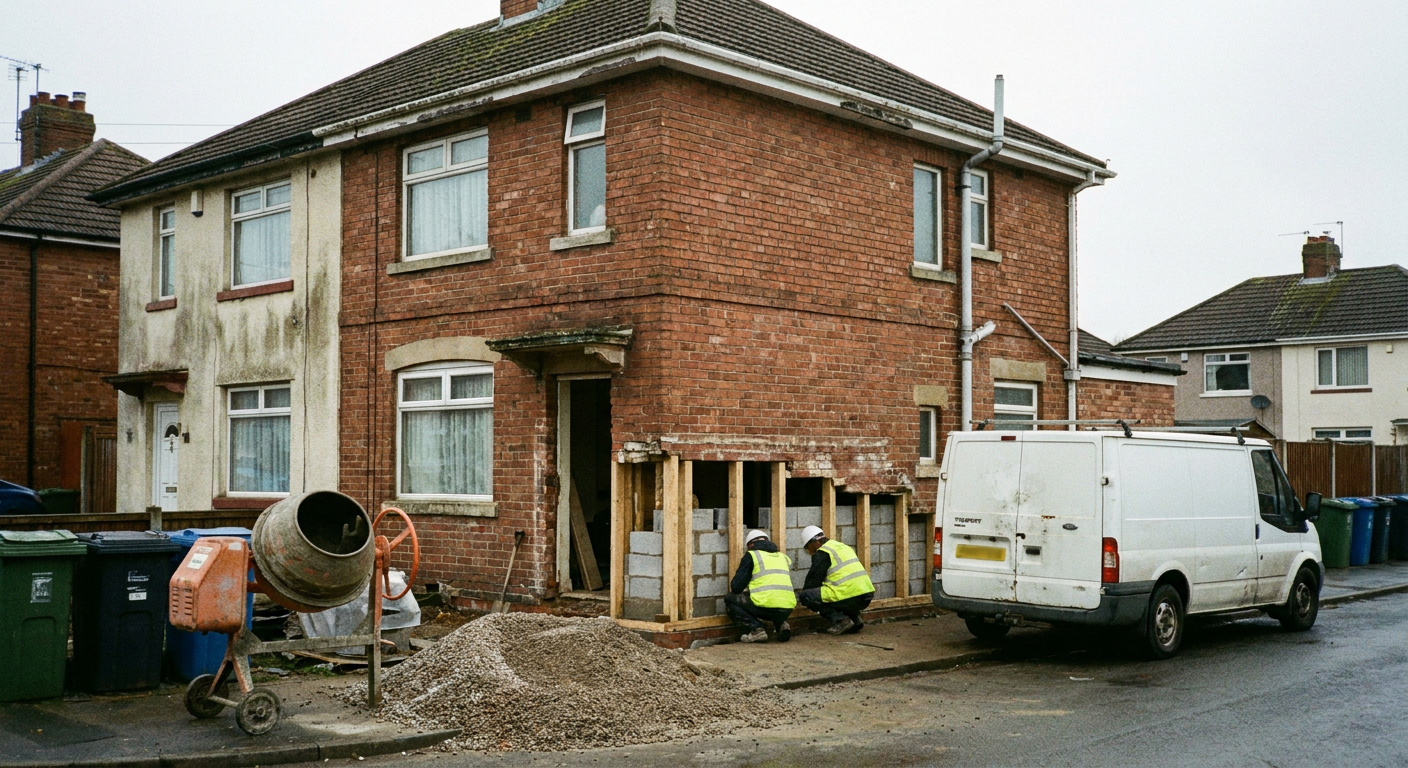
Floors sloping to one side
A ball rolls across the room on its own. The slope usually means the joists or the ground beneath them have dropped.
From movement to a stable footing
Every home reacts differently to shifting soil. These descriptions reflect what a specialist typically sees before starting work and what the site usually looks like once the ground stabilisation is finished.
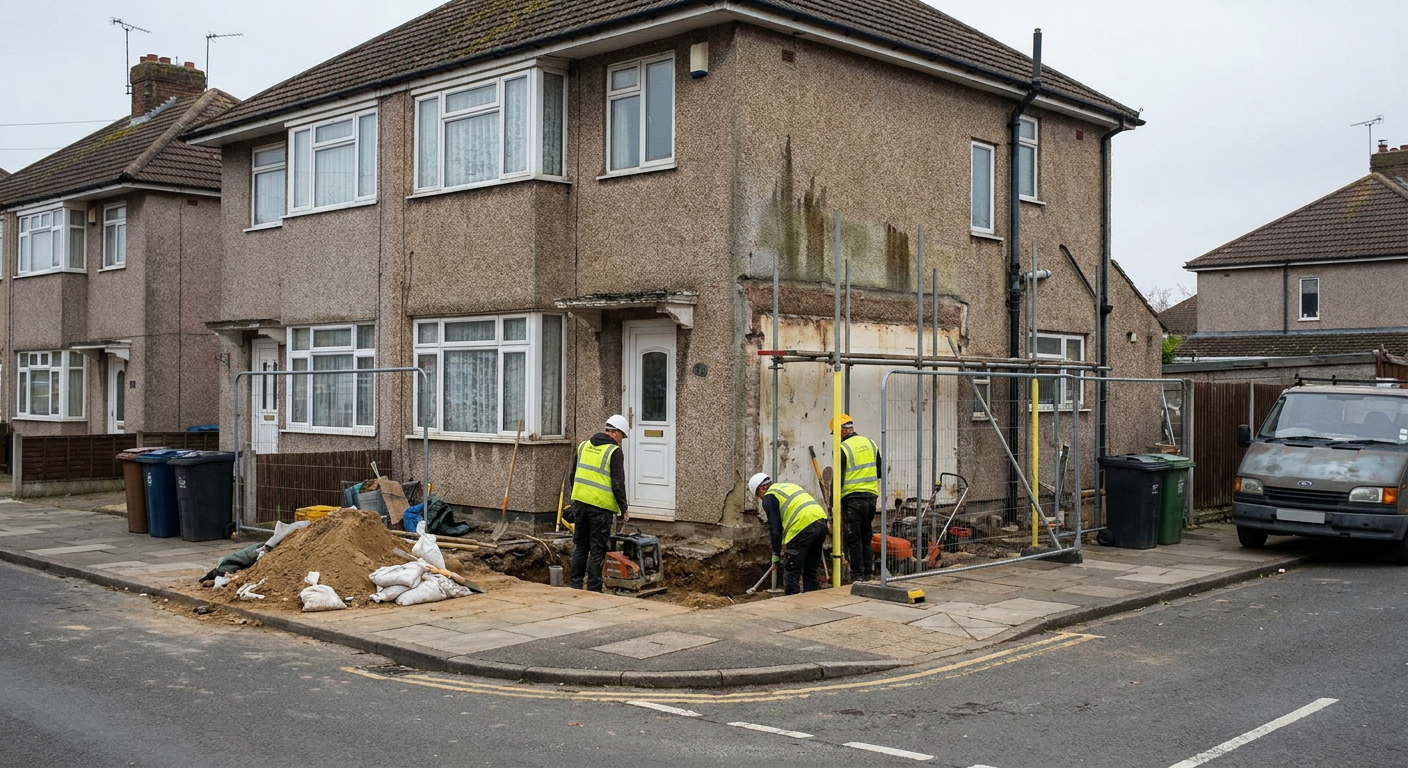
Before the work begins
Cracks widen over months, doors jam shut and the floor slopes noticeably towards one corner of the room.
After the resin cures
The ground beneath the footing is compacted. Cracks stop widening and doors swing freely again without catching on the frame.
Resin injection compared with excavation
Choosing between geopolymer injection and digging out depends on the soil, the building and how far the foundations have moved.
Geopolymer injection
- Disruption inside the home
- Small drill holes through the floor slab; no trenching required.
- Time to reuse rooms
- Usually the same day, since the resin cures within hours.
- Ground conditions needed
- Works where voids or loose fill sit at shallow depth.
- Effect on drains and cellars
- Low risk; resin expands slowly and flows around pipes.
Excavation and concrete
- Disruption inside the home
- Sections of floor lifted; trenches dug along the walls.
- Time to reuse rooms
- Days or weeks while concrete sets and floors are relaid.
- Ground conditions needed
- Used when firm strata lie deeper than resin can reach.
- Effect on drains and cellars
- Higher risk; digging near old clay drains requires care.
A specialist examines the soil and structure before advising which method suits your home.
How resin injection works step by step
You only need to describe what you have seen at home. The specialist handles the surveys, the drilling and the injection. Here is what usually happens from the first enquiry to the finished job.
-
Step 1
Enquiry received
You describe the cracks or sloping floors you have noticed. The details help determine if a site visit is the right next step.
-
Step 2
Site survey and ground check
A specialist visits your home, measures the movement and checks the soil type. They confirm whether geopolymer injection will work or if another method is needed.
-
Step 3
Drilling and injection
Small holes are drilled through the floor or external walls. Resin is pumped in, expanding to fill voids and compact the soil beneath the foundations.
-
Step 4
Monitoring the result
The specialist checks levels after the resin cures. If movement was caused by seasonal changes, they may recommend ongoing monitoring to confirm the ground stays still.
Towns covered around Huddersfield
Enquiries are taken from homes across Huddersfield and the surrounding towns. Specialist firms travel throughout the area to carry out surveys and ground stabilisation work wherever the soil conditions call for it.
If your town is not listed here, send an enquiry anyway. Coverage extends across the wider district.