Insurance guide
Does buildings insurance cover subsidence?
Find out how a subsidence claim on buildings insurance works, what an insurer usually asks for before approving repair work, and why reading the policy matters before reporting cracks.

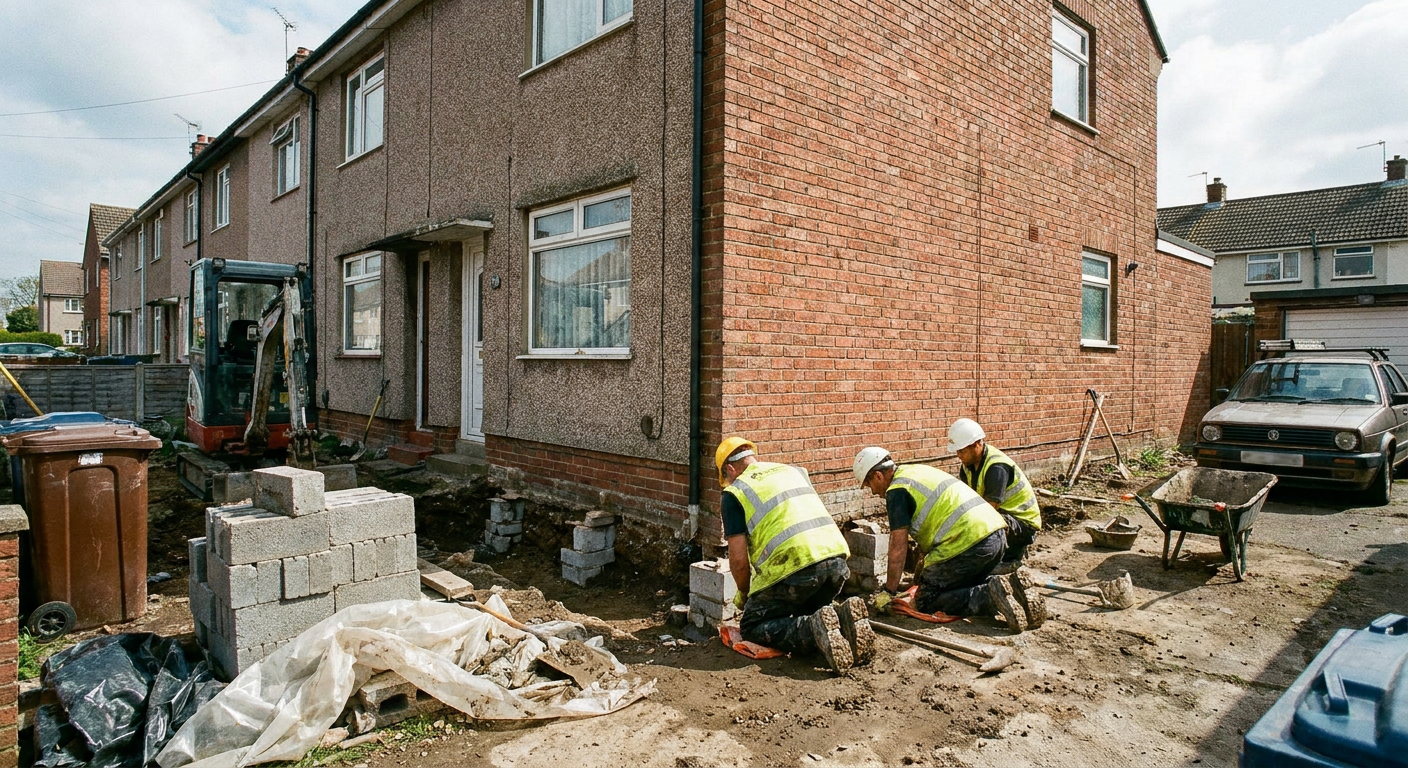
Is subsidence normally covered by buildings insurance?
People often ask does buildings insurance cover subsidence when they first notice a crack widening. Most standard buildings policies in the UK include cover for subsidence damage, but the wording varies. A subsidence claim on buildings insurance is not the same as a claim for general wear or poor maintenance.
The policy will define what counts as subsidence. Usually it means downward movement of the ground beneath the foundations that causes structural damage. Settlement from the weight of a new build, or heave from swelling soil, may be treated differently. Reading the definitions in the specific document is the only way to know what applies to a particular home in Huddersfield.
Some exclusions are common. Damage to paths, patios, boundary walls or garage floors is often left out unless the main house is affected at the same time. If the building was already moving before the policy started, the insurer may argue the damage predates the cover. A specialist carrying out a <a href="/subsidence-survey-huddersfield">subsidence survey</a> can establish when movement began.
Should I ring my insurer before getting anyone to look?
Reporting cracks to an insurer early prevents arguments later about when the damage appeared. Most policies require the homeowner to notify them as soon as structural movement is suspected. Delaying could give the insurer grounds to refuse part of the claim.
Calling the insurer first also means they can appoint their own engineer. An insurer appointed engineer for subsidence will visit the home, take measurements and decide whether the movement meets the policy definition. Their report directs the next steps, including whether monitoring is needed before any repair begins.
A homeowner can still commission an independent assessment. A separate <a href="/structural-monitoring-huddersfield">structural monitoring</a> programme gives a record of movement over months, which helps whoever eventually specifies the repair. The insurer might rely on their own findings, but having independent data rarely weakens a position. It simply provides another set of facts if the two reports disagree.
What is the excess likely to be on a subsidence claim?
The insurance excess for subsidence is almost always higher than the standard excess on the rest of the policy. Where a water escape claim might carry a few hundred pounds of excess, a subsidence claim frequently starts at a thousand pounds or more.
This figure is printed in the policy schedule. It applies per claim, not per year, so if the insurer treats two separate movements as two claims, the excess is payable twice. Some older policies written decades ago have lower excesses, but renewals tend to bring them in line with current norms.
Paying the excess is the homeowner's responsibility even when the insurer arranges and funds the <a href="/crack-repair-huddersfield">crack repair</a>. Budgeting for it early avoids surprises once the structural work is agreed.
Will a claim raise my premium or stop me insuring?
Making a subsidence claim will usually affect future premiums. Insurers price risk based on history, and a home that has moved once is statistically more likely to move again. The increase depends on the insurer, the severity of the damage and the cause.
Some people worry about whether they can insure a house with subsidence after a claim closes. Specialist insurers exist for homes with previous movement, though premiums are higher and terms tighter. Switching provider immediately after a claim can be difficult because the new insurer will ask for the claims history.
If the property sits near known hazards, such as the areas described in guides to <a href="/what-you-can-see/old-coal-and-quarry-workings">old mine workings and house cracks</a>, underwriters may add specific conditions. Declaring everything accurately at renewal keeps the policy valid.
Does my policy cover trees, drains or old mine workings?
Whether a policy covers damage from trees, leaking drains or old mine workings depends entirely on its wording. Many standard policies cover subsidence caused by clay shrinkage, which tree roots frequently worsen during dry summers. They may also cover leaks from underground drains washing soil away from the footings.
Mining subsidence is different. Parts of Huddersfield sit above historical coal and quarry sites. Damage caused directly by the collapse of old workings is sometimes excluded from standard buildings policies because a separate body handles compensation for mining damage. Checking whether the home falls within a defined mining zone clarifies which route applies.
If the cause turns out to be something the policy excludes, the damage becomes subsidence not covered by the policy. At that point the homeowner pays for any necessary <a href="/foundation-repair-huddersfield">foundation repair</a> themselves. Knowing the cause before assuming cover exists saves wasted effort.
Can I get a specialist report and send it myself?
You can commission a structural report yourself and send it to your insurer. The insurer does not have to accept it instead of their own investigation, but a detailed document from a chartered structural engineer or chartered surveyor adds weight to the claim.
The report should describe the pattern of cracking, record measurements taken over time and identify the probable cause. If the ground conditions suggest clay shrinkage, readings from <a href="/what-you-can-see/cracks-after-a-dry-spell">new cracks appearing after dry weather</a> help build the timeline. A specialist carrying out a <a href="/subsidence-survey-huddersfield">subsidence survey in Huddersfield</a> will typically include this information.
Sending the report does not replace the formal claims process. The insurer still needs to open a file, assign a loss adjuster and approve the scope of work. But arriving at that stage with evidence already gathered can shorten the period of uncertainty.
What if my insurer says the damage is not subsidence?
Insurers occasionally conclude that cracking is thermal movement, lintel failure or simple settlement rather than subsidence. When that happens, the claim is declined because the damage falls outside the insured peril.
The homeowner can challenge the decision. Asking for the full reasoning in writing, along with copies of any engineer's notes, shows exactly where the disagreement lies. If the independent evidence points to ground movement while the insurer's report points elsewhere, a second opinion may resolve it.
Sometimes the dispute centres on the extent of the movement rather than its existence. Minor seasonal shifts in <a href="/news/millstone-grit-and-clay-ground-under-huddersfield-homes">millstone grit and clay ground</a> might not meet the threshold the policy sets for structural damage. Understanding that threshold is essential before pursuing the matter further.
Will I still be able to sell the house after a claim?
Selling a home that has been underpinned or repaired for subsidence is possible, but the history must be declared to buyers and their mortgage lenders. Lenders will want proof that the work was completed properly and that the structure is stable.
Documentation matters here. Copies of the original survey, the specification for any <a href="/mass-concrete-underpinning-huddersfield">mass concrete underpinning</a> or alternative method used, building control certificates and the final engineer's sign-off all reassure a buyer's solicitor. Without them, the sale can stall.
Guides covering <a href="/news/underpinning-and-mortgages-selling-or-remortgaging">underpinning and mortgages when selling or remortgaging</a> explain what lenders typically request. A clean monitoring record showing no further movement since the repair is usually the strongest piece of evidence a seller can provide.
Reading the signs around your home
The same crack can mean different things depending on where it appears, how wide it is and when it opened. Context determines what a specialist looks for first.
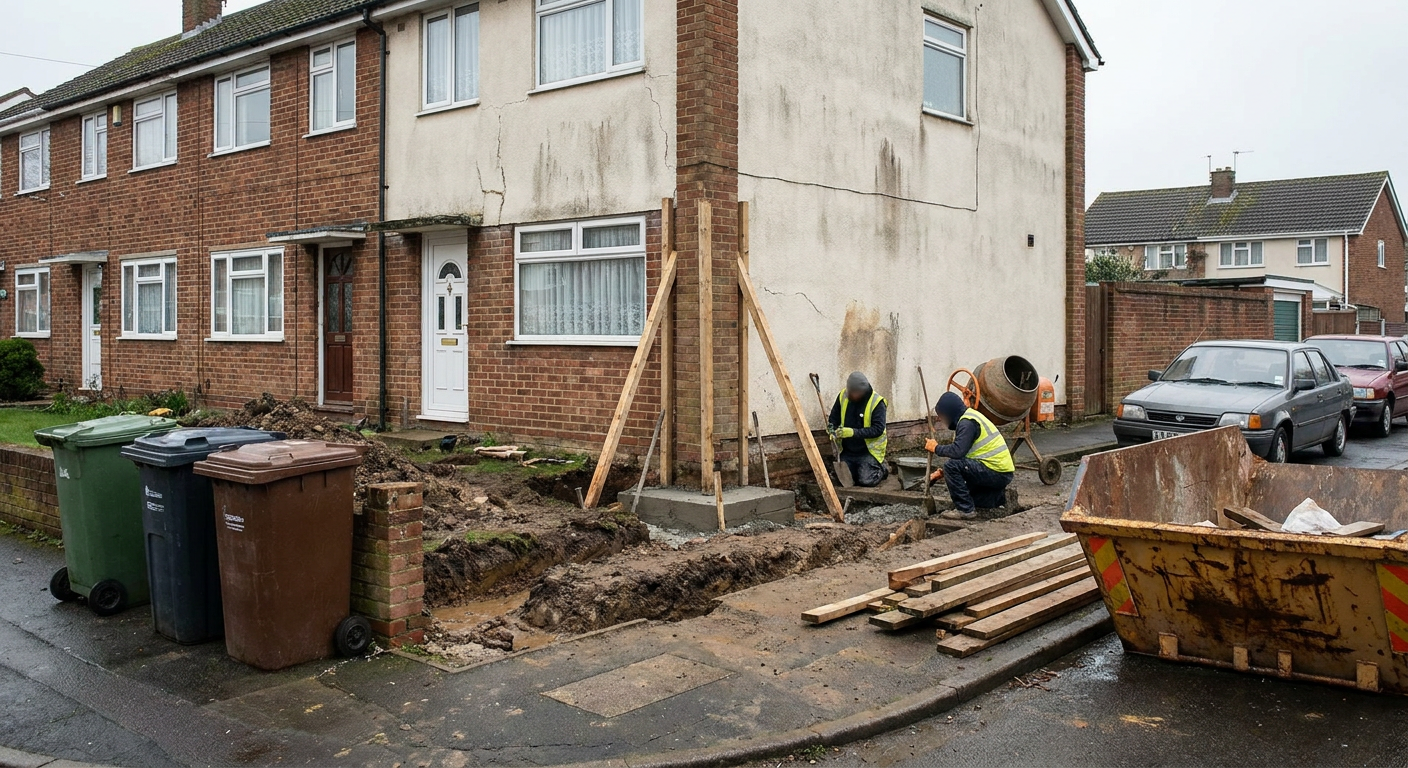
- Diagonal crack wider at the top
- Often points to foundation movement on one side. Measuring it over several months confirms whether the wall is still shifting.
- Doors sticking in the frame
- Frequently caused by distortion in the opening as the wall moves. A level check across the frame shows how far it has shifted.
- Gaps appearing around window sills
- Suggests the surrounding brickwork has dropped or spread. Photographing the gap with a ruler beside it creates a useful record.
- Floors sloping toward one wall
- Indicates differential settlement beneath the floor joists. A structural survey measuring levels across the room separates long-standing slopes from recent movement, and monitoring over several months would settle whether the ground is still shifting.
What shapes the cost of subsidence repair
Every home differs in construction, ground conditions and the extent of movement, so the scope of work changes from job to job.
- Depth of stable ground
- Deeper firm strata require longer piles or deeper excavations, increasing both material and labour requirements.
- Access around the house
- Tight side returns or restricted rear yards limit machinery size, sometimes requiring smaller plant or hand digging.
- Extent of the cracking
- Widespread damage across multiple walls demands more repair work than a single isolated fracture.
- Cause of the movement
- Tree root removal, drain repairs or ground stabilisation each involve different trades before structural work begins.
- Type of existing foundations
- Shallow Victorian footings behave differently from modern strip foundations, altering the repair specification.
The specialist explains the cost of the particular job before anything is agreed.
Ask about subsidence and your home
Send a description of what you have noticed. It goes to a local office that takes enquiries for specialist firms working in Huddersfield. There is no obligation to proceed.
- No commitment required
- Local knowledge
- Plain advice