Guides and articles
Underpinning and subsidence guides for Huddersfield
Read through these guides to understand what a crack means, how the ground beneath Huddersfield behaves, and what happens when a specialist firm underpins a house. Each piece deals with one problem you might have noticed.
What a crack in the brickwork actually tells you
A line running through mortar or plaster is the first thing most people notice. Stepped cracks that follow the joints in brickwork point to movement in the wall below, because the bricks separate along their weakest lines. A straight vertical crack might just be the building settling after construction.
You can track whether a crack is active by measuring it at the same points each week. If the gap widens after a long dry spell, clay shrinkage is likely pulling the ground away from the footings. Doors and windows sticking in their frames often accompany this, as the opening distorts when the wall shifts.
An upstairs floor that slopes noticeably suggests the movement has reached the joists. None of these signs guarantee subsidence, but they do mean a structural survey should happen before the damage spreads further.
Ground conditions beneath Huddersfield houses
The geology under Huddersfield varies street by street. Much of the town sits on millstone grit, a hard sandstone that holds firm unless water washes the softer material out from under it. Other areas rest on boulder clay, which swells when wet and shrinks when dry, dragging foundations down with it.
Old coal and quarry workings add another layer of risk. Shafts and tunnels left over from mining run beneath parts of the Colne Valley and the surrounding villages. When these voids collapse, the ground above drops without warning. Houses built over old quarry sites face similar problems if the fill material was never compacted properly.
A subsidence survey identifies which of these factors is affecting a specific home. The surveyor checks the soil type, reviews historical maps for mine entries and measures the extent of the movement so the right repair method can be chosen.
How specialist firms stabilise a moving foundation
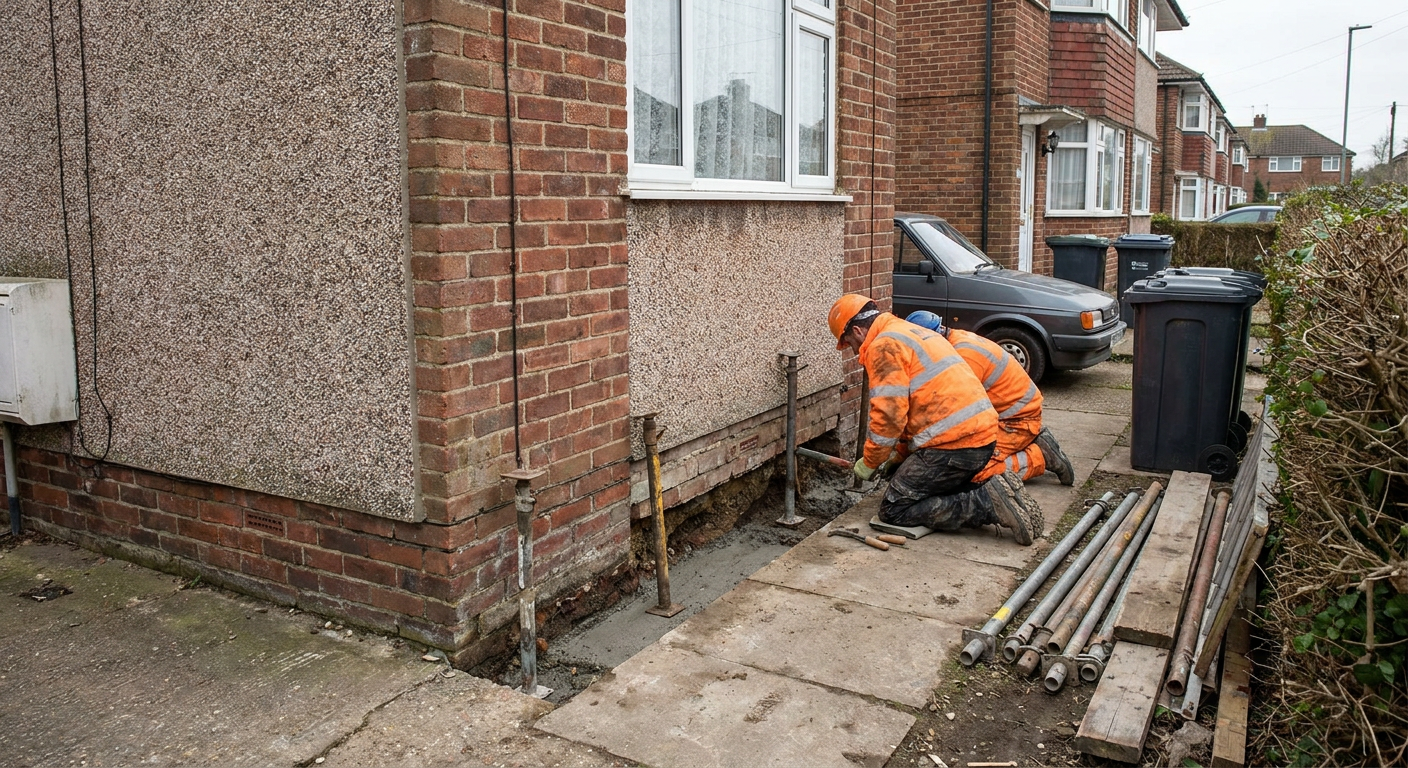
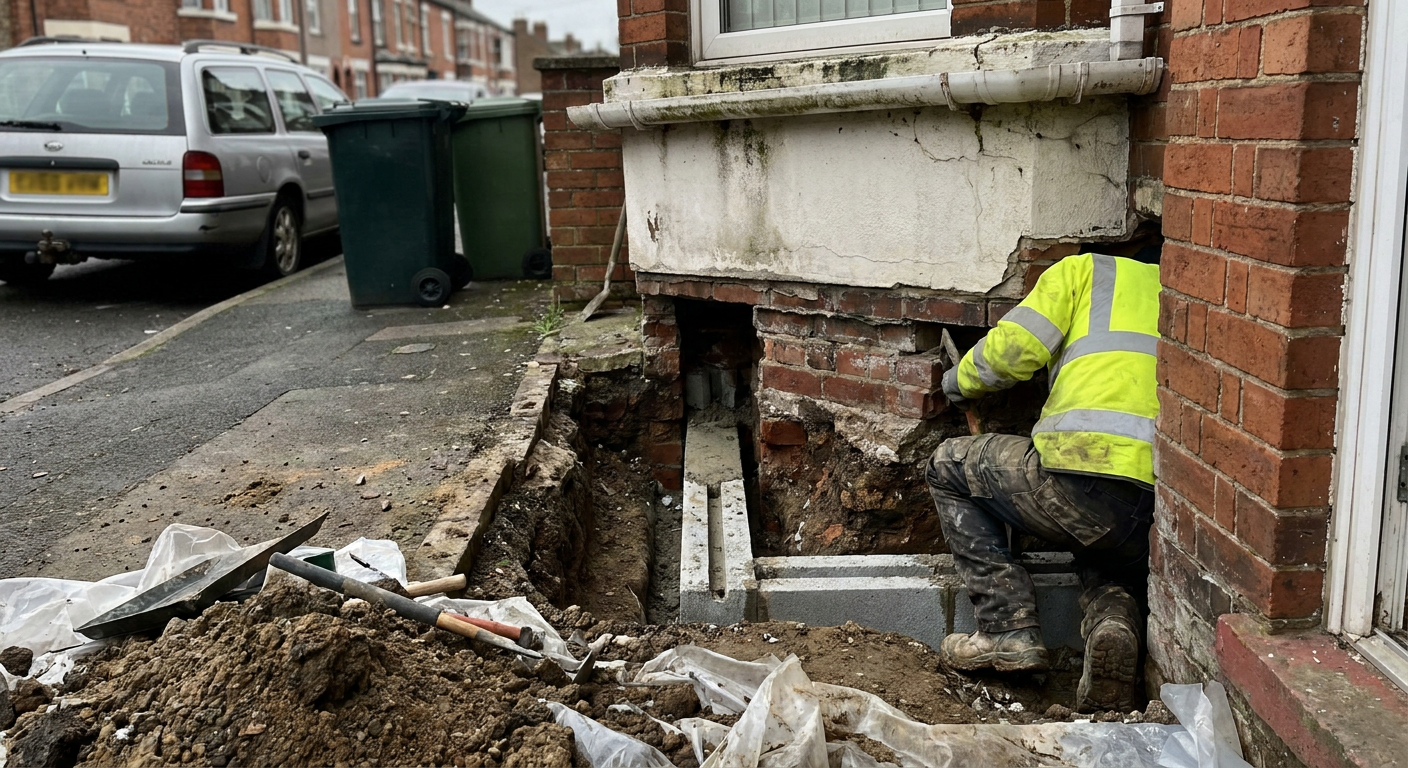
Once the cause is clear, the work begins below ground level. Mass concrete underpinning involves digging out sections of soil beneath the existing footing and filling them with fresh concrete in a planned sequence. This extends the foundation down to stable ground. It suits heavier stone-built Pennine houses where the walls need broad support.
Where access is tight, mini piled underpinning drives steel piles deep into load-bearing strata, bypassing weak upper layers entirely. Resin injection offers a different approach: expanding resin pumped into the soil compacts loose ground and lifts settled slabs without excavation.
For homes needing extra space below ground, basement underpinning lowers the floor while strengthening the walls at the same time. Crack repair follows once the structure stops moving, stitching the masonry back together so the wall acts as a single unit again. Structural monitoring runs alongside all of this, using fixed gauges to confirm the movement has genuinely stopped before any cosmetic finishes go back on.
Paying for the work and selling afterwards
Buildings insurance covers subsidence in most standard policies, though the excess can be high and the insurer will want their own reports before approving a claim. Understanding who pays for underpinning helps avoid surprises when the bill arrives.
If you plan to sell or remortgage, lenders ask questions about past structural work. Having a full record of the survey, the method used and the monitoring results makes the process straightforward. Building control approval is required for underpinning in Huddersfield, so the local authority holds a certificate confirming the work meets regulations.
The depth of the new foundations depends on where solid ground lies. Pin depths vary from shallow trenches to several metres, dictated by trial holes dug before the main work starts. Choosing underpinning contractors means checking they understand these local requirements and carry the correct insurance for working below existing structures.
Tell us what you have noticed in your home
Send a description of the problem. Someone will read it and reply with plain advice on whether a survey is needed. There is no obligation to proceed with any repair work.
- No commitment required
- Plain advice, not sales talk
- Local knowledge applied