Subsidence guide
Door frame out of square and windows that stick
A door that stops latching might be swollen timber or a shifting foundation. Find out how to tell the difference, what a specialist checks next, and whether it matters for your home.
Damp swelling versus a dropped frame
A back door that suddenly refuses to latch is one of the first things people notice when something shifts in their home. The question is whether moisture has swelled the timber or the wall has moved enough to pull the frame out of square.
In Huddersfield, where older houses sit on millstone grit and clay ground, both happen regularly. Damp swelling tends to follow heavy rain or a cold spell. The wood expands evenly and the sticking usually eases once the weather dries. A frame pulled by movement behaves differently. The sticking does not come and go with the rain. It stays, and often gets worse over weeks.
If you are trying to work out whether a sticking door is damp or movement, look at the gap above the door frame. Widening at the top corner while the opposite side pinches shut points away from simple swelling. That uneven geometry suggests the masonry around the frame has shifted. A subsidence survey establishes which force is at work before anyone touches the woodwork.
Checking a frame without a builder
You do not need a builder standing in your hallway to see if a frame has dropped. Take a small spirit level and hold it against the vertical edge of the door lining. If the bubble drifts off centre, the upright is no longer plumb. Then check the horizontal head. A tilt there confirms the whole opening has distorted.
Another sign is the reveal. Open the door halfway and look at the gap between the door edge and the frame all the way down. Even spacing means the frame is still true. A gap that tapers from wide at the top to tight at the bottom, or vice versa, shows distortion. People sometimes describe this as a door sticking suddenly in an old house after years of working perfectly. That sudden change, rather than gradual seasonal rubbing, is what separates normal wear from potential structural movement.
Measuring a crack near the frame helps too. Hairline cracks running diagonally from the top corner of the opening suggest the lintel or the masonry above has settled.
Planing the door or leaving it alone
The instinct when a door jams is to plane the edge so it shuts again. If the cause is seasonal damp, shaving a millimetre off the wood solves the problem until the next wet winter. But if the real cause is an out of square frame driven by subsidence, planing the door removes material you cannot put back.
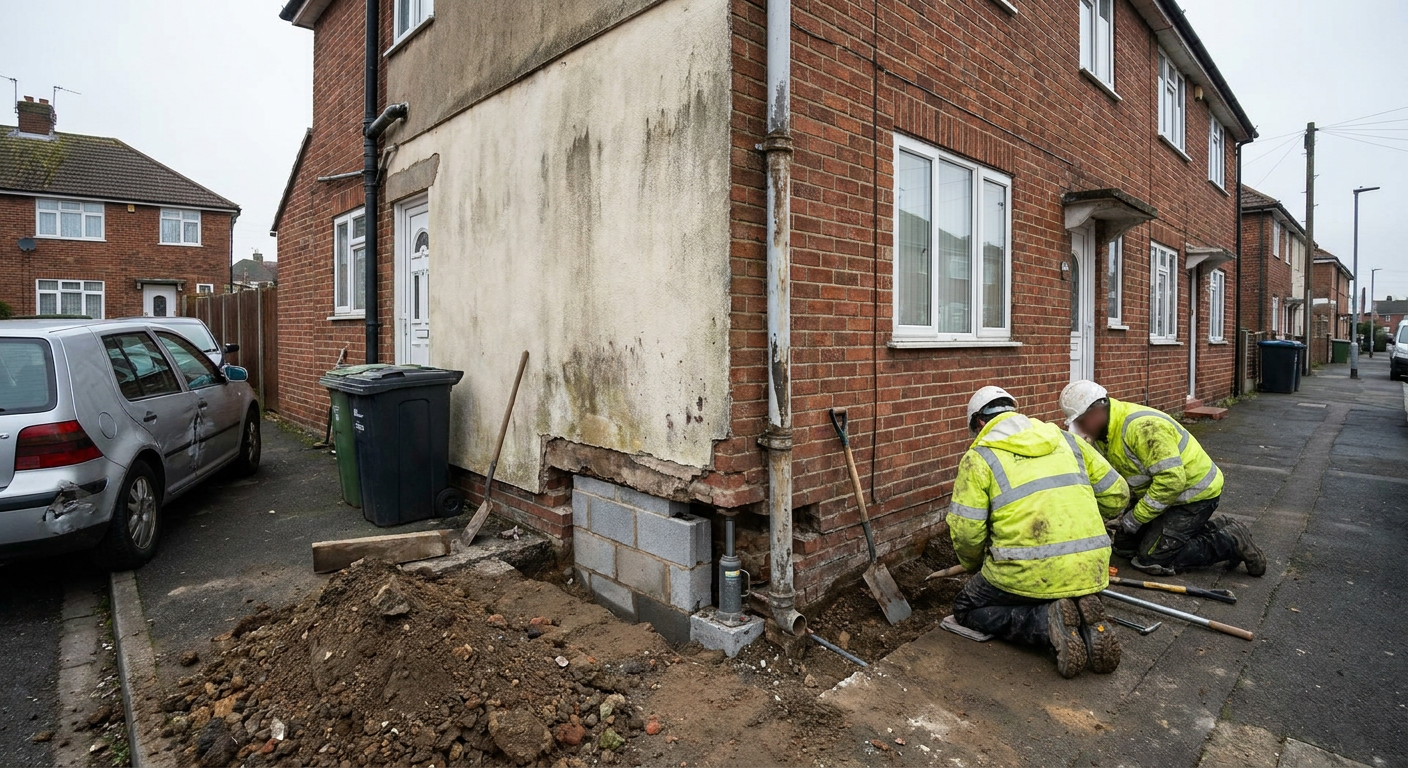
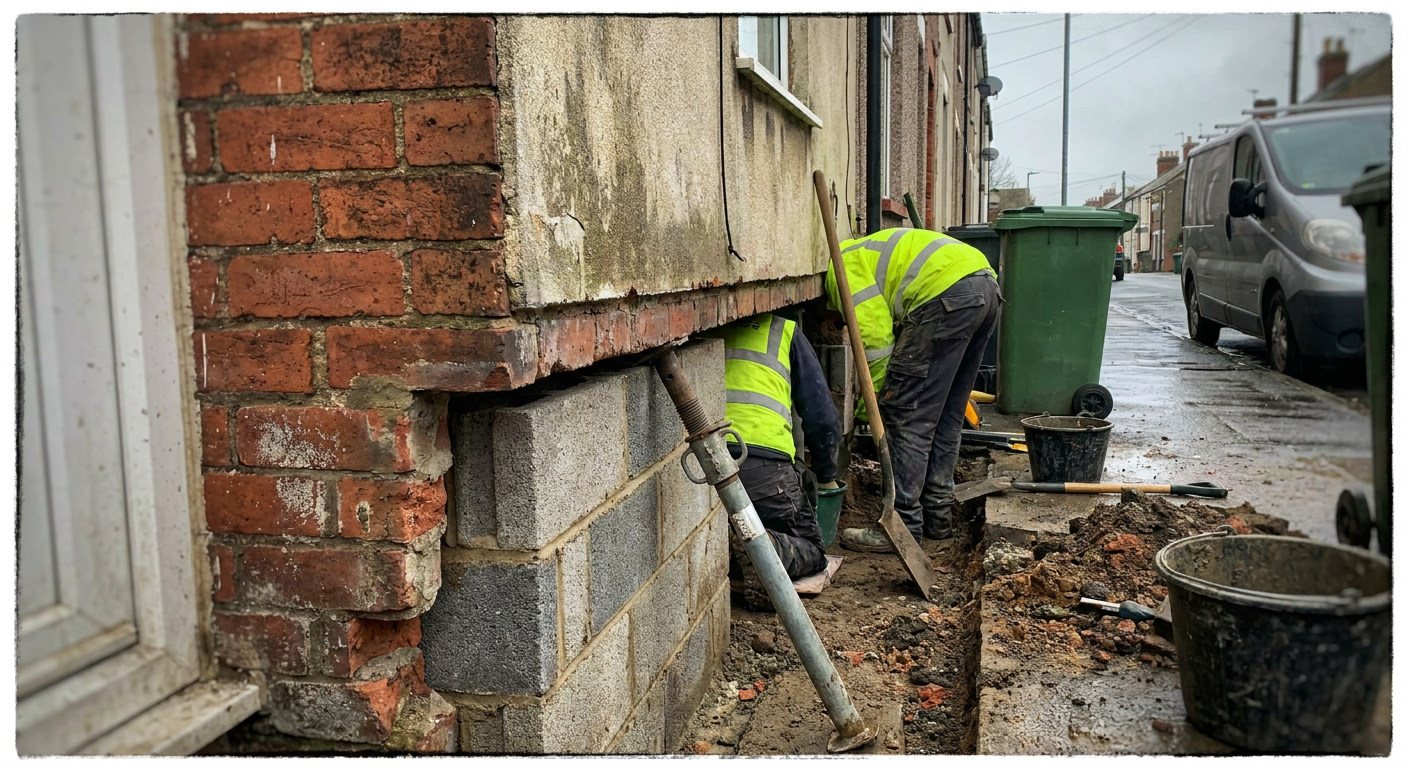
Worse, it hides the symptom while the ground underneath continues to move. By the time the sticking returns, the distortion may have spread to adjacent windows or internal walls. Specialist firms who carry out [foundation repair in Huddersfield](/foundation-repair-huddersfield) see this often: a door trimmed three times before anyone looks at the footings.
Leave the door as it is until the reason for the jamming is established. If the frame has moved, the solution starts below ground level, not with a hand plane. Once the structure is stabilised, a carpenter can rehang or adjust the door to fit the corrected opening.
Several doors jamming upstairs at once
One sticking door can be a warped piece of timber. Doors jamming upstairs only, across several rooms in the same month, point to something affecting the whole floor plate. When a foundation settles unevenly, the distortion travels up through the walls and into the joists.
Upper floors in older Huddersfield houses are often more flexible than the ground floor. They absorb the twist first, which is why bedroom and bathroom doors start binding together. Check whether the floors slope. A marble placed on the landing will roll toward the settling side. Sloping floors combined with multiple sticking doors form a pattern that warrants professional attention.
This is distinct from central heating drying out timber in winter, which affects individual doors at random. Coordinated sticking across a single storey, especially after dry weather that shrinks clay soils, aligns with structural movement rather than humidity changes.
Sticking sash windows in older houses
Sash windows rely on precise alignment to slide freely. When a window frame is no longer square, the cause is rarely the timber itself warping in isolation. The surrounding brickwork dictates the shape of the opening. If the wall moves, the box frame distorts with it.
In Victorian and Edwardian terraces across Huddersfield, sash windows are particularly sensitive to settlement because their tall, narrow openings amplify even small shifts. A gap appearing at the meeting rail, or one sash dropping while the other binds, mirrors the behaviour of a distorted door frame.
Old mine workings beneath parts of the town add another variable. Houses built over former coal or quarry sites can experience localized voids collapsing decades later. If sticking sash windows coincide with new cracks in the external brickwork, the two symptoms likely share a single underground cause. Structural monitoring tracks whether that movement is ongoing or historical.
What a specialist checks after the frame
Once a survey flags movement behind the sticking door, the investigation shifts from the joinery to the ground. A specialist firm will examine the external walls for stepped cracking in the mortar joints, paying close attention to the corners nearest the affected frame.
They check the damp proof course for fractures, since a broken membrane allows moisture to soften the subsoil directly beneath the footing. Drainage runs are tested for leaks; a leaking pipe washing out clay under a corner is a common trigger in Huddersfield.
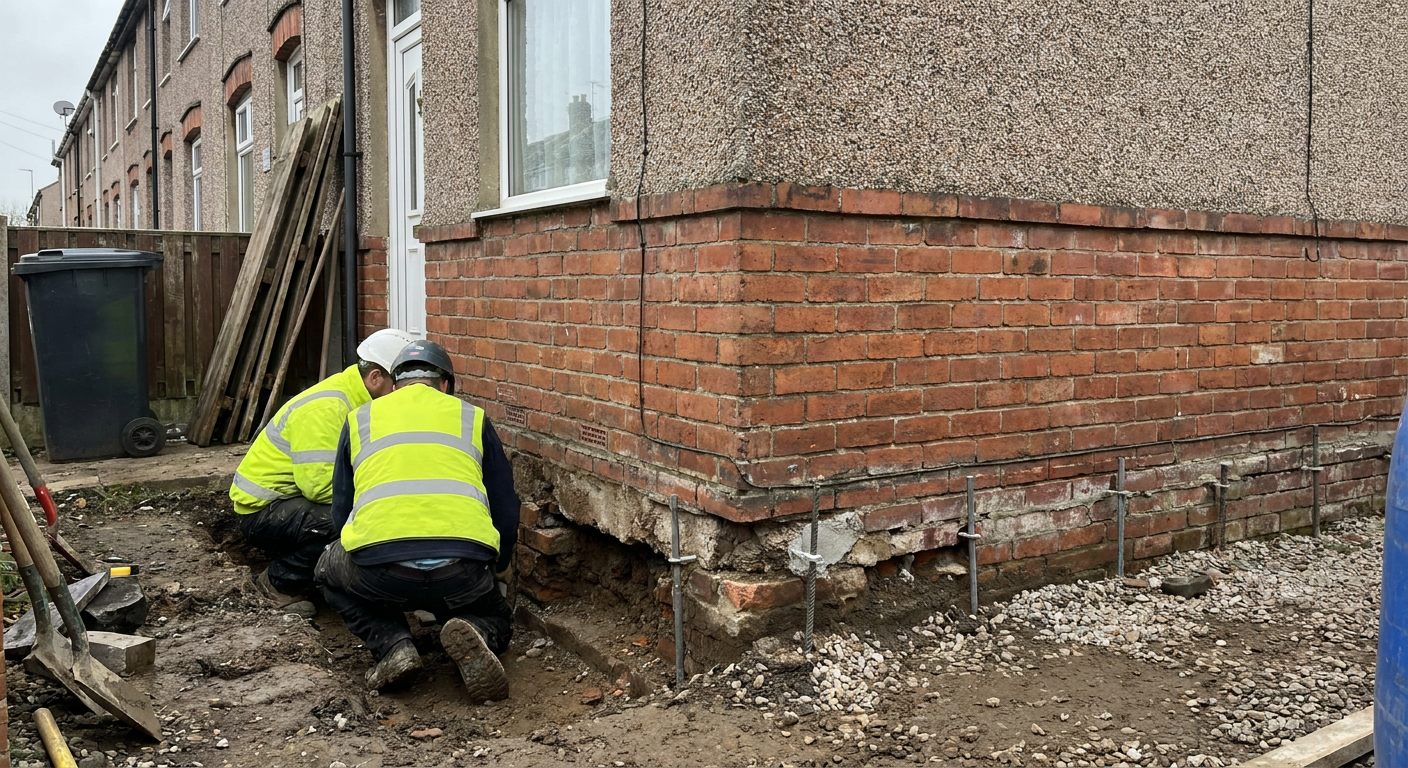
Depending on what they find, the remedy ranges from repairing a drain to installing mass concrete underpinning beneath the affected wall. Where access is restricted, such as a narrow side return, mini piled underpinning reaches stable strata deeper down. Resin injection ground stabilisation offers another route where the soil needs consolidation without extensive excavation. The choice depends entirely on the soil profile and the depth of competent ground.
Reading the signs around a stuck door
The same sticking door can stem from swollen wood, a failed lintel, or a shifting foundation. What surrounds the frame determines which explanation fits.
- Gap above the door widening on one side
- Uneven settlement pulling the lintel down. Measuring the gap weekly shows whether the movement is active or has stopped.
- Diagonal crack from the frame corner
- Masonry tension caused by a dropping foundation pulling the wall out of alignment. A subsidence survey establishes the depth and cause of the shift so the right repair can follow.
- Door sticks only after heavy rain
- Timber swelling from absorbed moisture rather than structural distortion. The problem typically eases as the wood dries out.
- Skirting board separating from the wall
- The wall is rotating or the floor is dropping away from it. Both point to ground movement beneath the room.
- Sash window jamming alongside the door
- A wider section of wall is distorting, pulling several openings out of shape at once. Structural monitoring pins track the rate of movement to show whether the ground is still shifting.
Questions about sticking doors and frames
My back door has stopped latching, is that damp swelling or has the frame moved?
Damp swelling usually follows wet weather and eases when the timber dries. Movement keeps the door stuck regardless of rain. Check the gaps around the frame. Uneven spacing suggests the wall has shifted. A subsidence survey tells you which force is responsible.
How can I tell if a door frame is out of square without a builder?
Hold a spirit level against the vertical edge of the frame. If the bubble sits off centre, the upright has tilted. Measure the diagonal distances from corner to corner inside the opening. Different measurements confirm distortion.
Should I plane the door down or will that cover up a real problem?
If the cause is ground movement, planing removes wood you cannot replace and hides the warning sign. Leave the door untouched until a specialist firm has inspected the frame and the surrounding walls.
Why have several doors upstairs started sticking in the same month?
Multiple doors binding across one floor suggests the joists or supporting walls have twisted together. This happens when a foundation settles unevenly. Check for sloping floors in the hallway as a secondary indicator.
Do sticking sash windows in an old Huddersfield house mean anything structural?
Sash frames distort when the surrounding brickwork moves. In areas with old mine workings or shrinkable clay, sticking sashes accompanied by external cracks often point to foundation settlement rather than isolated timber failure.
If the frame has been pulled out of square, what gets checked next?
A specialist firm examines the external walls for stepped cracks, tests drains for leaks, and inspects the soil type. These steps determine whether underpinning or simpler repairs are needed to stabilise the wall.
Is this the kind of thing insurers treat as subsidence damage?
Insurers generally require evidence that ground movement caused the distortion, not just a sticking door. A report from a subsidence survey provides the documentation needed to support a buildings insurance claim.
How much does it cost to have someone come and look at the frames and walls?
Fees vary depending on the scope of the inspection. Enquire through the contact page with details of what you have noticed. That information helps determine which type of survey is appropriate for your home.
Find out what the sticking door means
Send details of the door and any cracks you have noticed. The enquiry goes to a specialist firm who deals with foundation movement in Huddersfield. There is no obligation to proceed with any work.
- No obligation to proceed
- Local specialists only
- Plain advice first