Guide
Upstairs floor sloping: causes and what to check
Many older homes in Huddersfield have floors that are slightly out of level. Find out how to tell the difference between a long-standing slope and one that is still moving, and what to look for next.
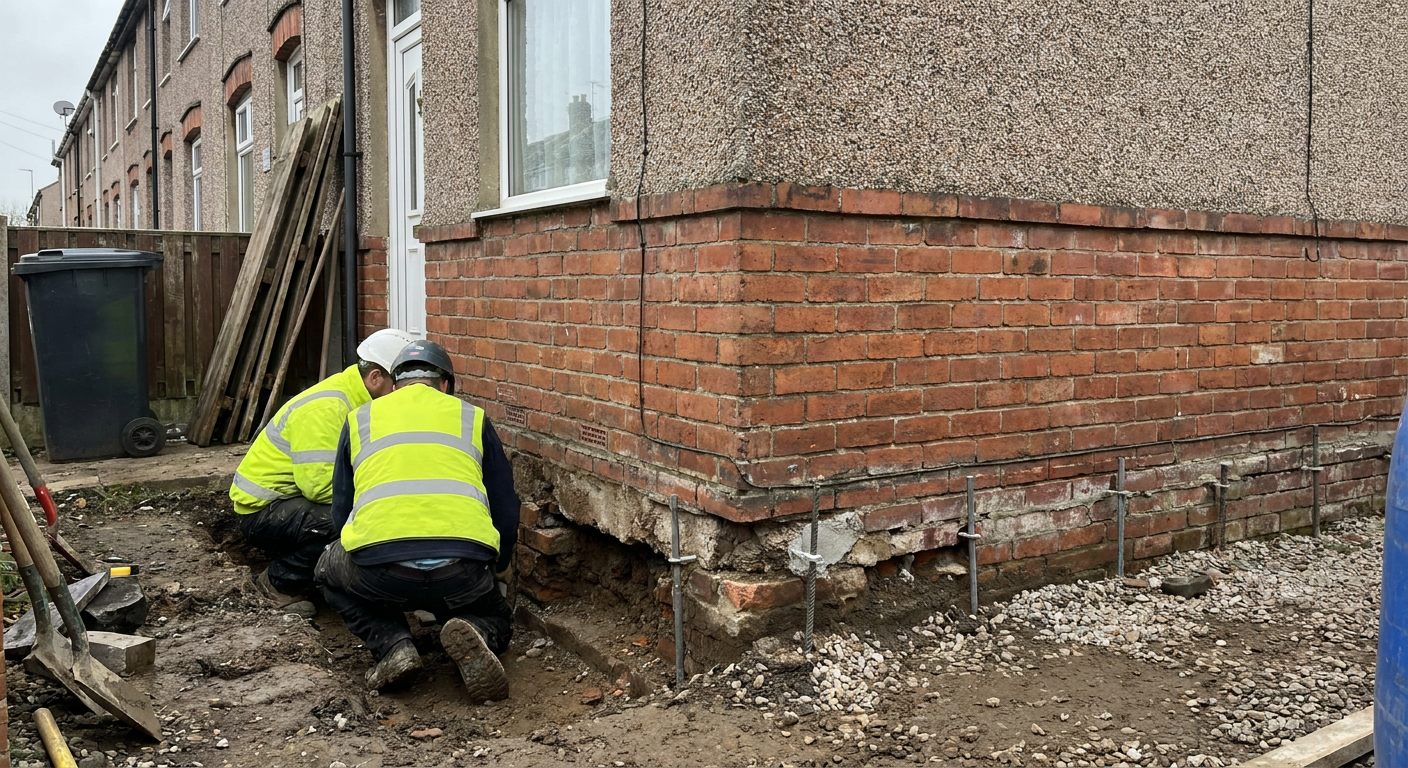
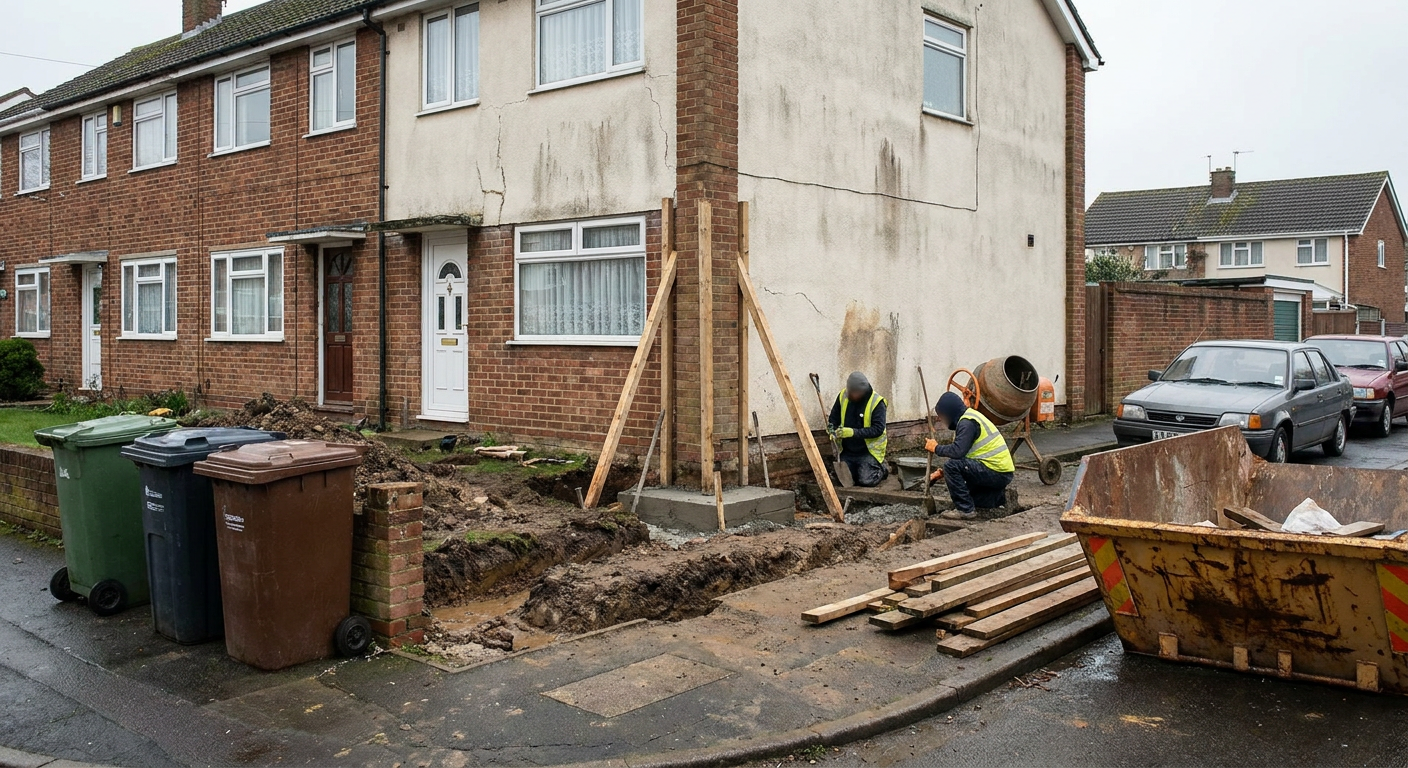
Why an upstairs floor slopes in older Huddersfield houses
A bedroom floor has always sloped in many Victorian and Edwardian terraces across Huddersfield. Timber shrinks, joists deflect under decades of weight, and stone-built walls settle unevenly into the millstone grit and clay ground beneath them. An uneven floor in an old terraced house is often part of its history rather than proof of a new problem.
The question people ask is whether the slope is still moving or if it settled long ago. A subsidence survey in Huddersfield can establish this. The specialist firm will look at the whole structure, not just the room where you noticed the dip. They check the ground below, the condition of the footings, and any cracks that might point to recent movement rather than old settlement.
Is a sloping floor subsidence? Not necessarily. But if the slope has increased over months, or if you see fresh cracking alongside it, the cause could be ground movement. In parts of West Yorkshire built over old mine workings, the ground can shift long after the coal was taken. That makes a professional assessment worth having.
Checking the slope yourself before calling anyone
You do not need expensive equipment to get a first impression. Place a spirit level on the floorboards and note which way the bubble sits. Move it to several spots across the room, both parallel to the joists and at right angles to them. Mark the direction and rough size of the fall with tape so you remember where it was worst.
This tells you the floor is out of level, but it cannot tell you why. Sagging floor joists upstairs usually produce a dip that runs across the room, following the span of the timber. Ground movement tends to tilt a whole wall or corner, so the slope feels more like a ramp than a bowl. The distinction matters because the repair is entirely different.
If you want to track changes, measure the gap under the spirit level at the same points each month. Write the numbers down. A structural monitoring specialist in Huddersfield uses precise instruments to do the same job over weeks or months, but your own notes give you something concrete to show them when they visit.
Telling sagging joists from ground movement below
Timber joists in a Huddersfield terrace are often over a century old. They bend under load, especially if the spans are long or the wood has dried out near a chimney breast. This produces a localised dip. You might feel it most in the centre of the room, while the edges stay relatively flat. It is a structural issue, but it belongs to the carpentry, not the foundations.
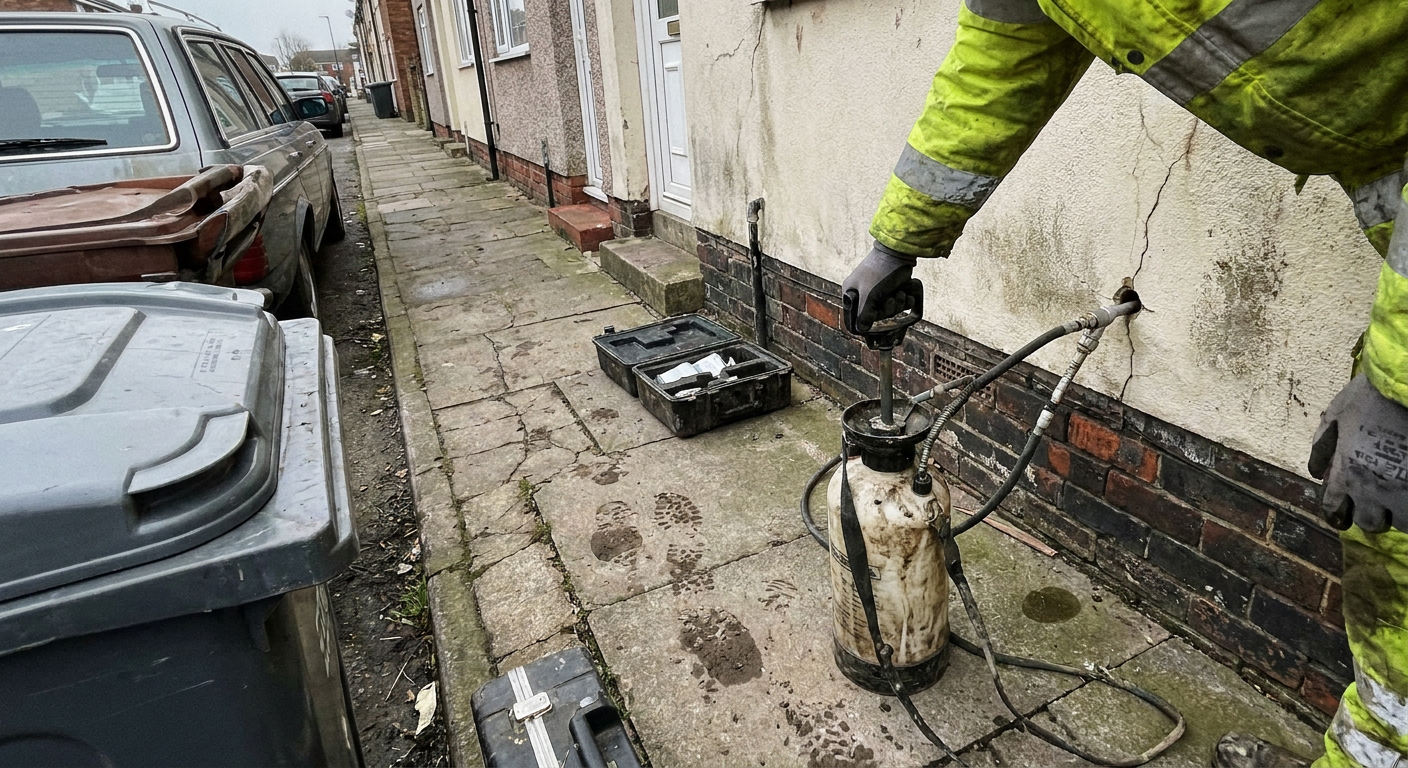
Ground movement shows itself differently. If the foundations are shifting, the whole wall moves. The floor slopes towards that wall, and you will usually find other signs nearby: doors that no longer close square, cracks stepping through the brickwork outside, or gaps opening between skirting boards and the floor. A foundation repair specialist in Huddersfield looks for this pattern to separate joist deflection from subsidence.
What is the difference between a sagging joist and ground movement below? The answer lies in the scale. Joist sag is local. Foundation movement drags the whole corner of the house with it. Will a surveyor be able to say when the slope happened? They can date some cracks by their appearance, and monitoring over a season confirms whether movement is active or historic.
Selling a house with a sloping floor in West Yorkshire
A buyer worried about a sloping floor is common during sales in Huddersfield. Mortgage lenders rely on valuation surveys, and a surveyor who flags movement will usually recommend further investigation before the loan is approved. That does not mean the sale collapses. It means the lender wants clarity on whether the ground is stable.
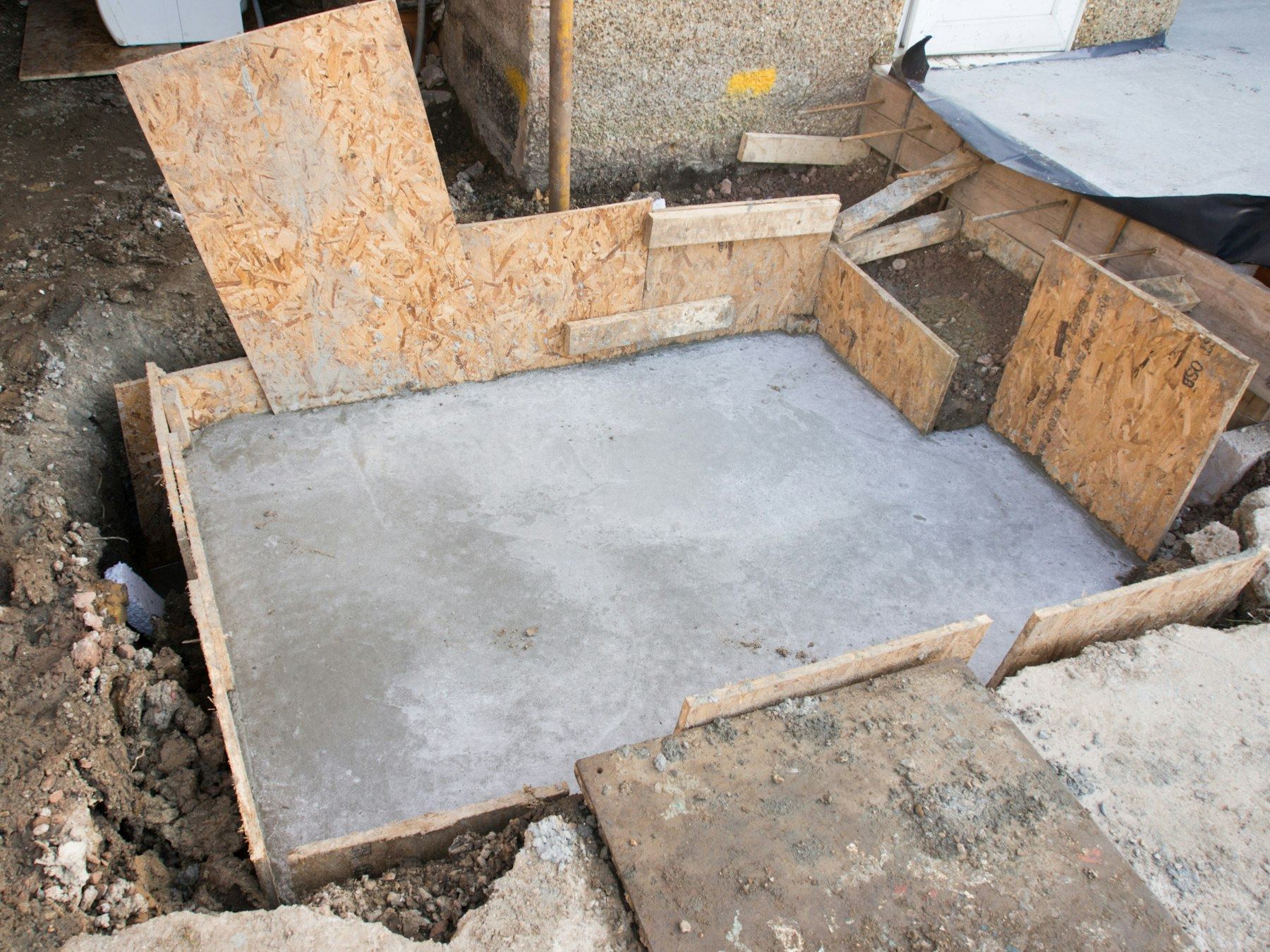
Does a sloping upstairs floor affect selling the house or a buyer's mortgage? It can delay things if the cause is unknown. A floor slope survey in West Yorkshire carried out by a specialist gives the buyer and the lender a factual report. If the slope is historic and the building is stable, the report says so plainly. If underpinning is needed, options such as mass concrete underpinning in Huddersfield or mini piled underpinning in Huddersfield can be specified, and the cost becomes a known figure rather than a guess.
Honesty early prevents problems later. If you already know the floor slopes, mention it before the buyer's surveyor finds it. Having a report ready shows you understand the house and have taken responsibility for it.
What else to look for around a sloping floor
A slope on its own rarely tells the full story. Other marks in the room or on the outside walls help explain whether the movement is old, new, or still happening.
- 1
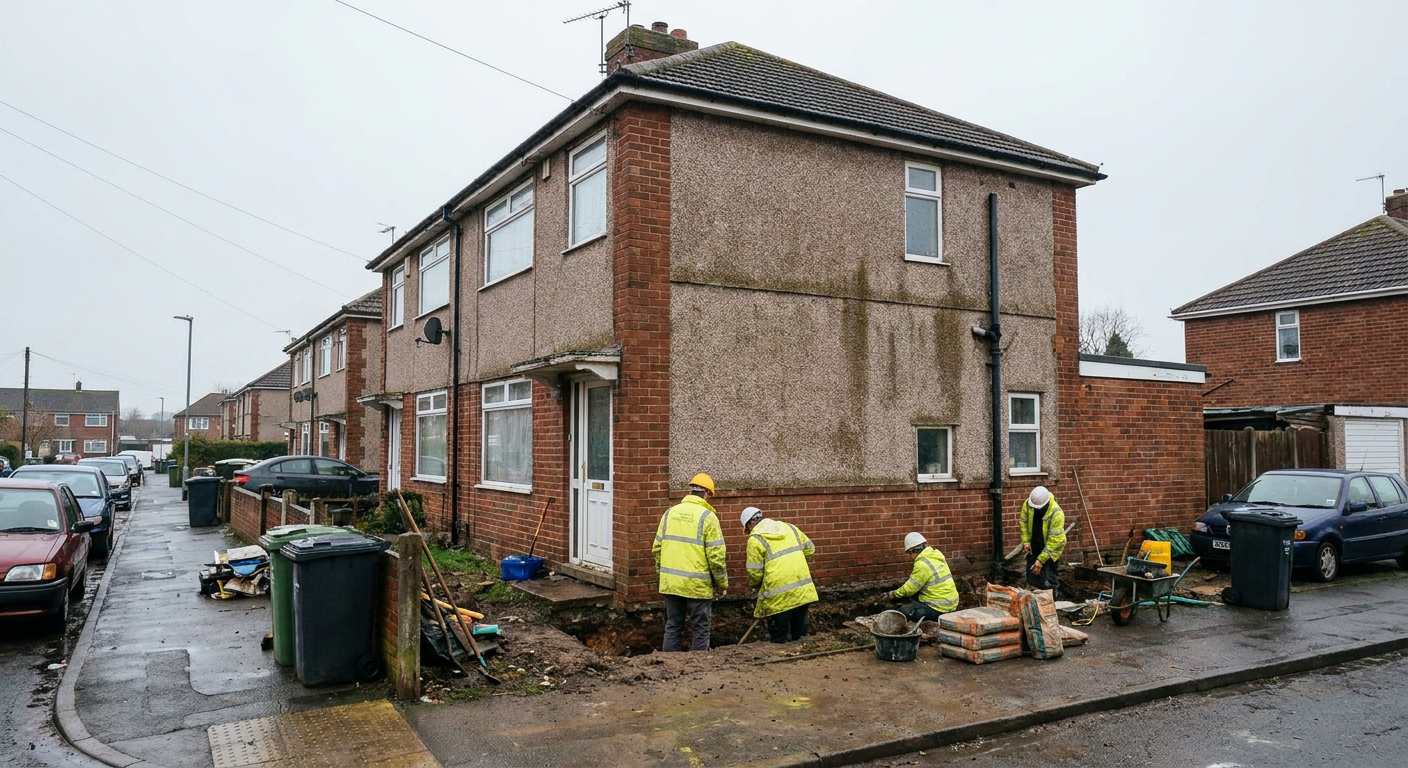
Stepped cracks in external brickwork
Cracks following mortar joints in a stair pattern suggest wall movement. Fresh, clean edges mean it may be recent.
- 2
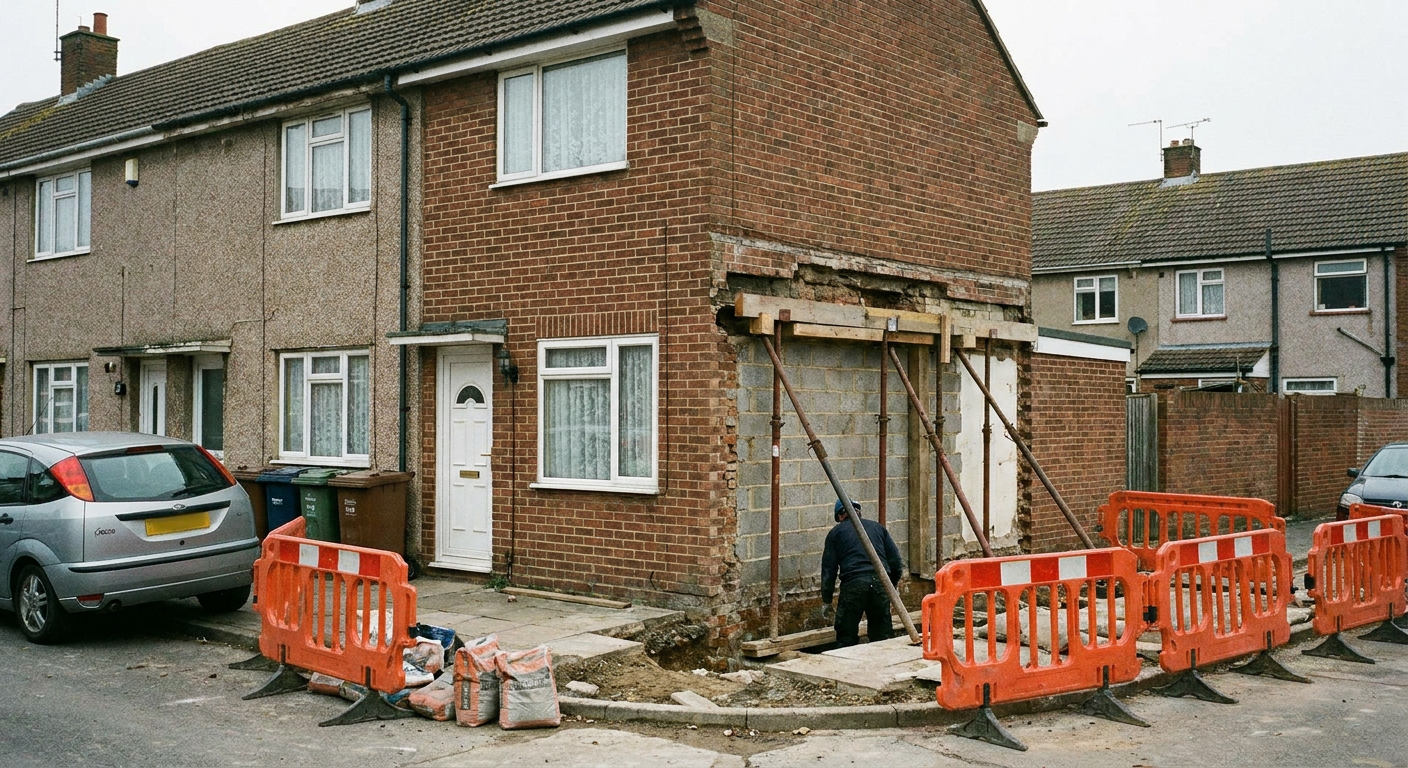
Doors sticking or catching frames
A door that rubs the frame or will not latch can mean the opening has distorted. Check several rooms, not just one.
- 3
Gaps at the skirting board
If the floor has dropped away from the wall, a visible gap opens along the bottom edge of the skirting.
- 4
New cracks after dry weather
Long dry spells shrink clay soil. Cracks that appear in summer and narrow in winter point to seasonal ground change.
Questions about sloping floors in Huddersfield
These are the things homeowners and buyers ask most often when a floor is noticeably out of level.
- Who should look at it first
- A subsidence survey specialist visits the home, checks the ground conditions, measures the movement and reports what needs doing next.
- What the first visit involves
- Expect questions about the history of the slope, a walk around inside and out, and measurements taken at key points.
- Can I fix it with resin injection
- Resin injection ground stabilisation in Huddersfield suits certain soil conditions. The specialist firm decides if the ground here takes it.
- Will building control be involved
- Building control approval for underpinning in Huddersfield is required if foundations are altered. The contractor handles the application.
- What if it is only the joists
- If the foundations are sound, the slope may come from timber deflection. That is carpentry work, not underpinning.
- Does insurance cover the survey
- Buildings insurance sometimes covers subsidence investigation. Check your policy wording before arranging a survey.
Ask about the slope in your home
Send details of what you have noticed. The enquiry goes to a specialist firm who deals with ground movement and underpinning in Huddersfield. It does not commit you to any work or cost.
- No obligation
- Local specialists
- Plain answers