Describe what you have noticed
Mass concrete underpinning
Mass concrete underpinning in Huddersfield
A crack near the floor or a sticking door often points to shallow footings moving. Mass concrete underpinning in Huddersfield uses the traditional pin-by-pin method to stabilise them. Describe what you have noticed and a specialist will advise on next steps.
- Traditional pin-by-pin method
- Suited to shallow Victorian footings
- Specialist firms do the work
The method
How pin-by-pin works here
- Digging the bays
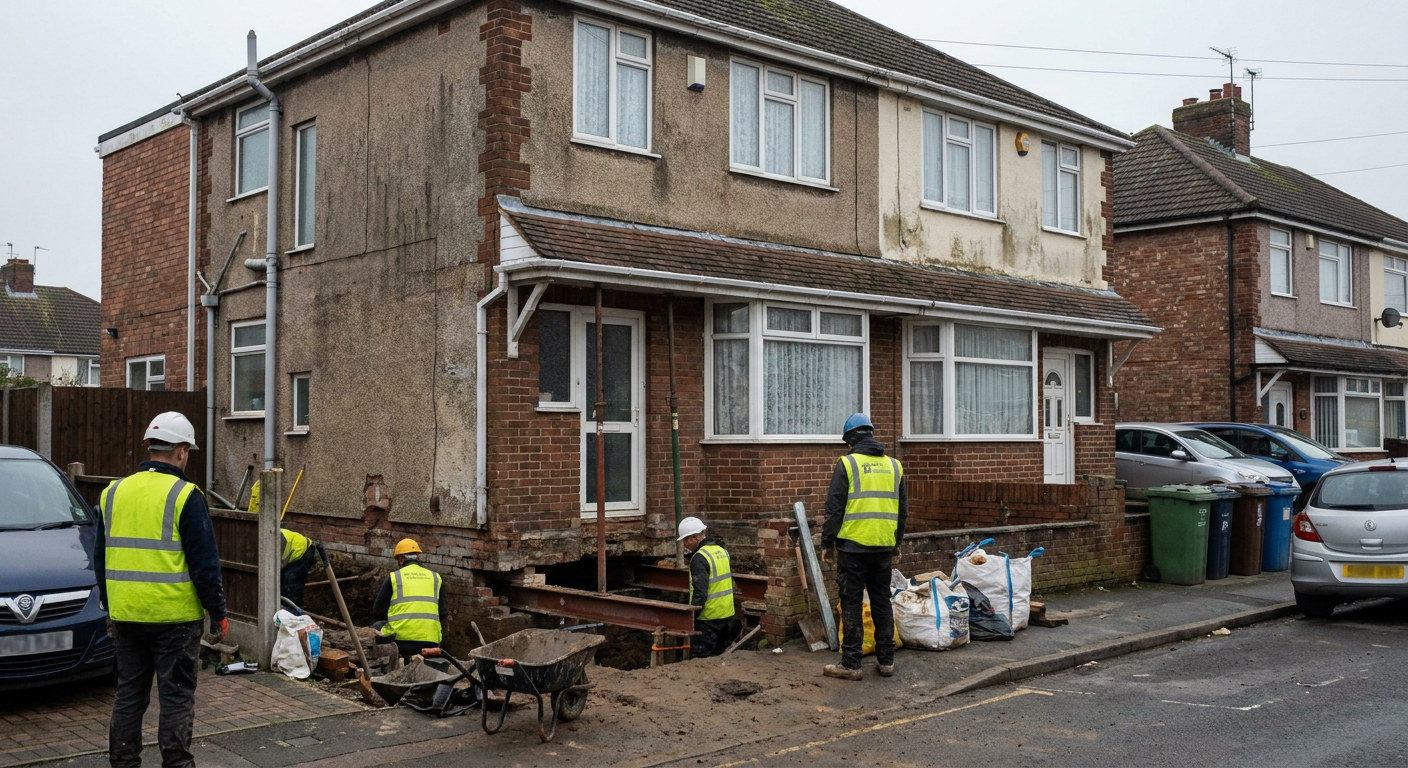
- The specialist excavates short sections, called bays, one at a time beneath the existing footing so the wall above stays supported throughout the dig.
- Pouring the concrete
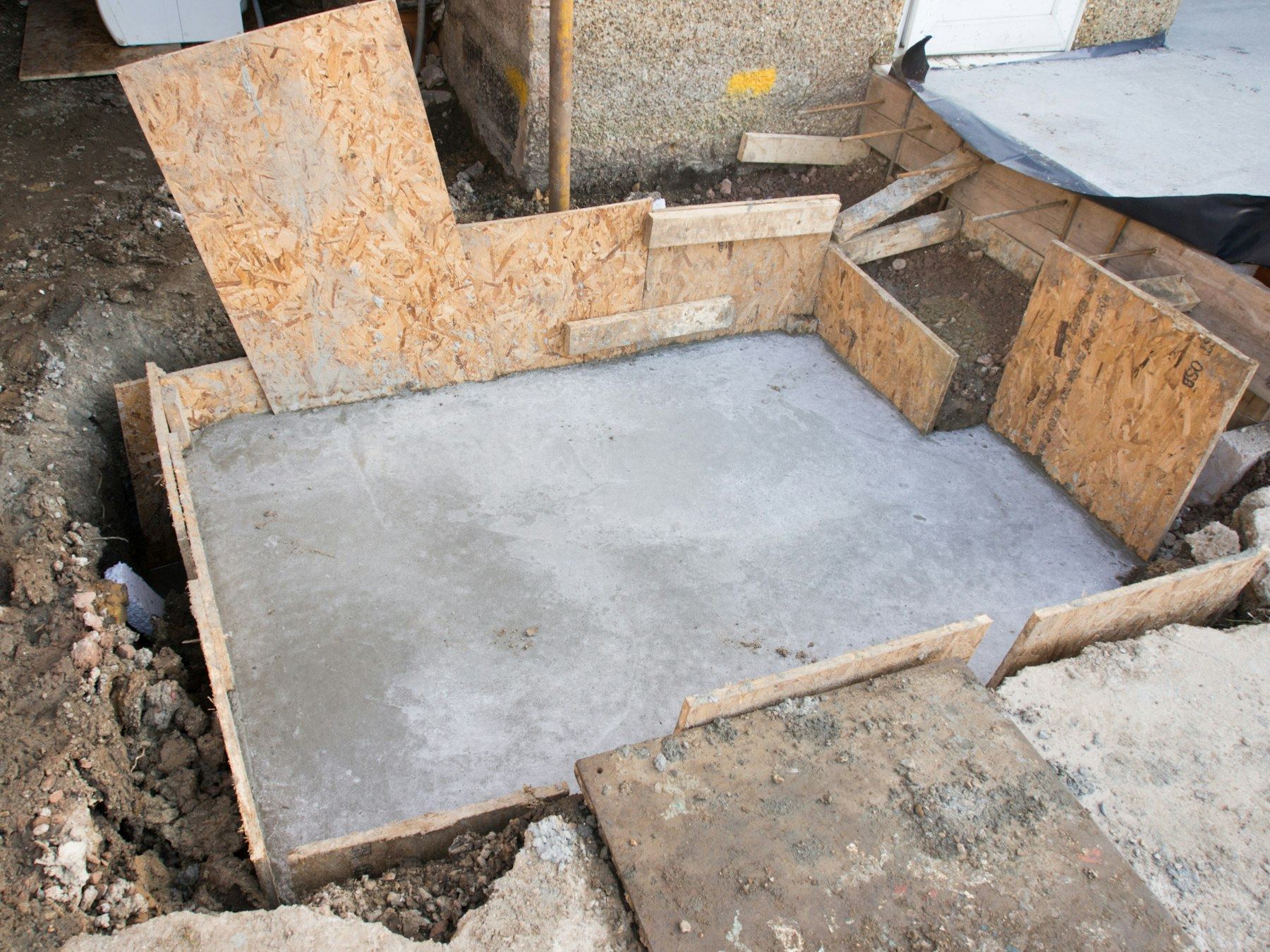
- Each bay is filled with mass concrete up to the underside of the old footing, forming a new deeper base before the next section is started.
- Pinning up
- Once the concrete has set, the small gap between it and the original footing is packed tight with a dry mortar mix to transfer the load.
When it suits
Why a stone terrace needs this rather than resin
Victorian terraces in Huddersfield were built on shallow stone footings. When the ground beneath them shrinks or washes away, the walls crack. Resin injection suits different problems, but underpinning Victorian terrace footings gives the wall a new concrete base to rest on.
A specialist may recommend pin-by-pin work because the soil needs a solid bearing stratum that liquid resin cannot provide. The depth depends on where firm ground sits, which varies street by street across West Yorkshire.
Concrete underpinning contractors in West Yorkshire assess how deep is underpinning dug by looking at trial holes and local geology. In many parts of Huddersfield, firm clay or rock lies only a metre or two below the existing base.
From cracked brickwork to backfilled trenches
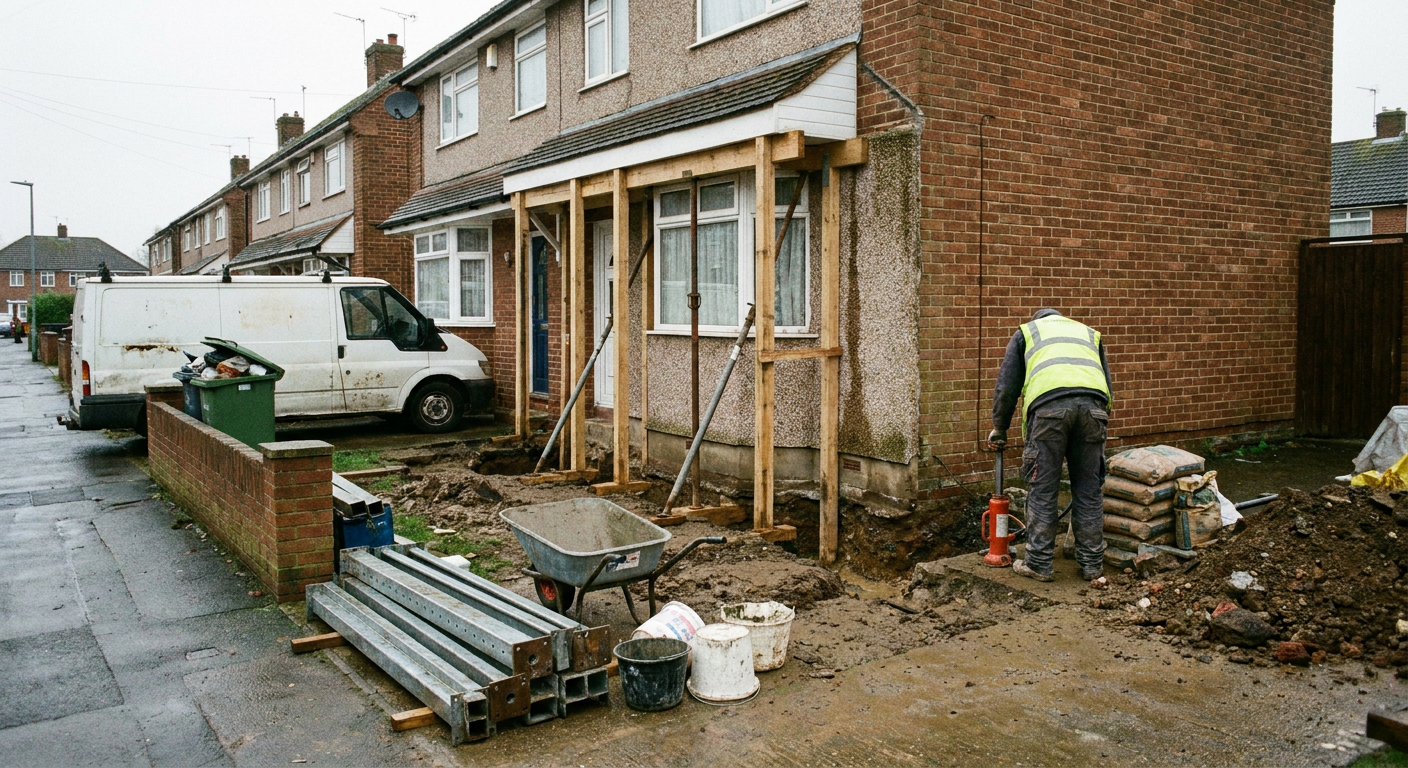
Every house behaves differently, but these are the typical stages a homeowner sees when the traditional method is used on a stone terrace.
Before work starts
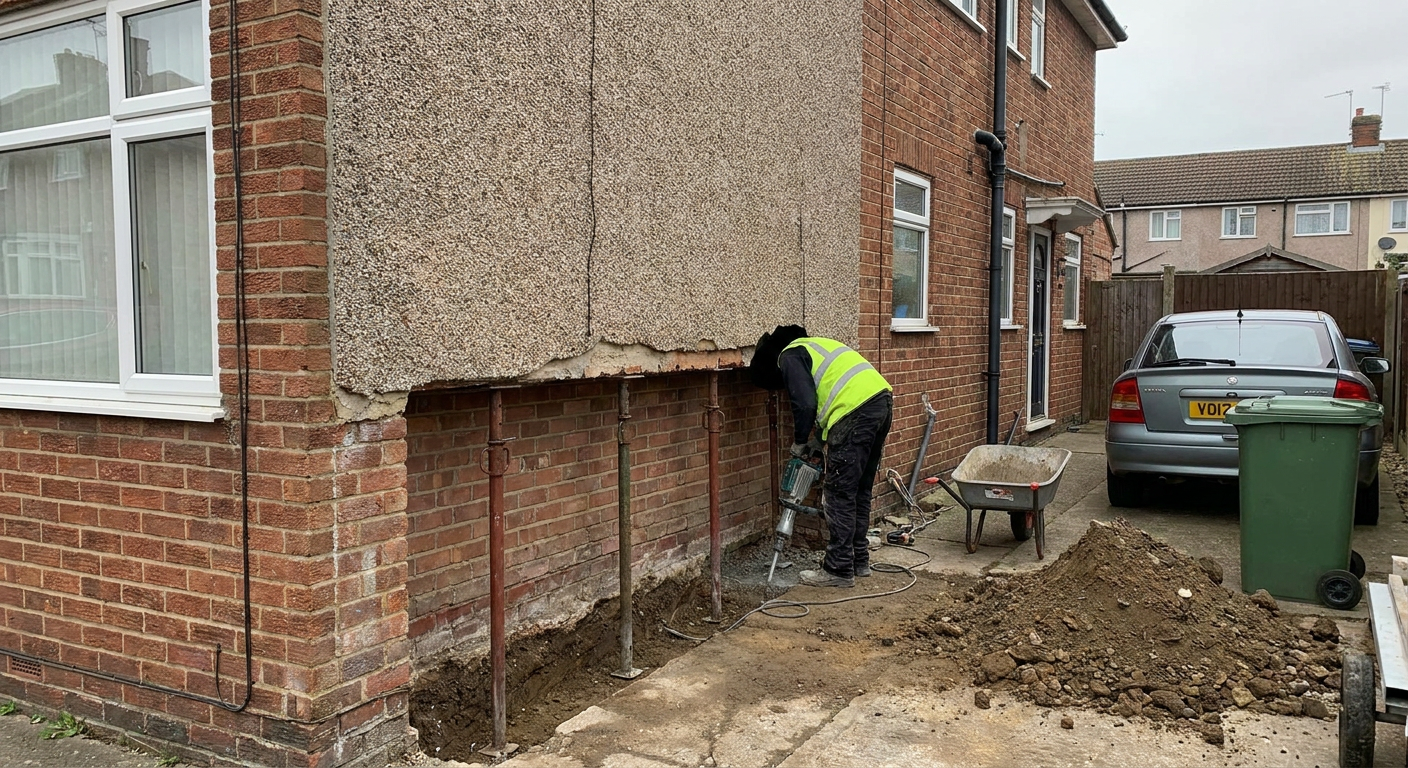
Stepped cracks run through the mortar joints. Doors stick against their frames, and gaps appear around skirting boards where the wall has dropped away from the floor.
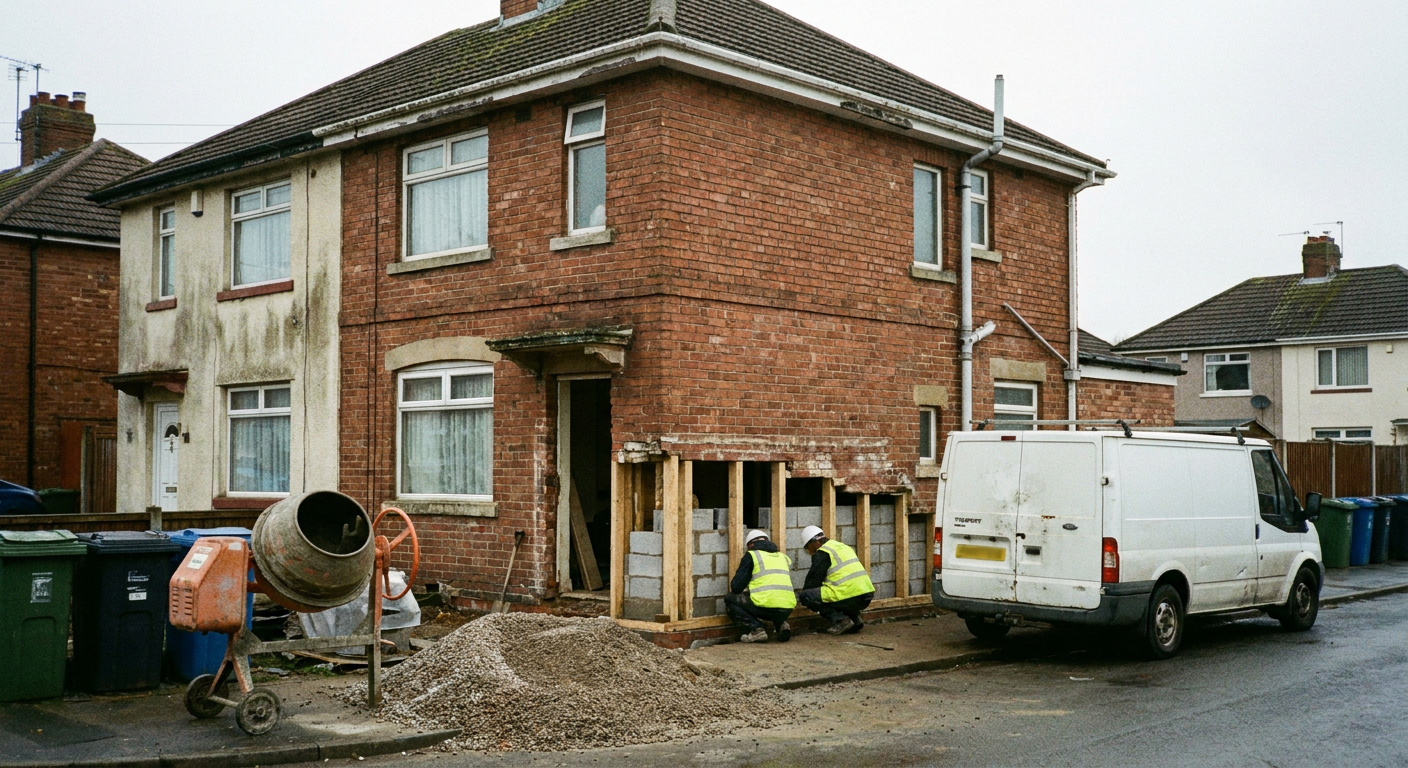
After the bays are complete
The trenches are backfilled and the garden reinstated. The new concrete bases sit below the old footings, and the cracks are left stable enough for cosmetic repair.
What shapes the cost of each bay
No two houses settle in the same way, so no two jobs cost the same. The ground conditions and access dictate the amount of digging involved.
- Depth to firm ground
- Deeper bays need more excavation, more concrete and longer temporary support, which increases the work required.
- Access to the wall
- Narrow side returns or shared yards mean spoil must be barrowed out by hand rather than machine.
- Number of bays needed
- A single corner might need three bays, while a full gable wall could need ten or more.
- Ground conditions
- Running sand or waterlogged clay requires timber sheeting inside the trench to keep the sides from collapsing.
The specialist explains the full cost of the particular job before anything is agreed.
Living at home and comparing quotes
Homeowners usually ask whether they can stay put, how long the work takes, and what belongs in an underpinning quote in Huddersfield.
- Staying in the house
- Most people remain living at home while bays are dug outside. Internal floors may be lifted if work runs beneath them.
- Length of the job
- Each bay must cure before the next is dug. A typical terrace wall takes several weeks from first dig to final backfill.
- Insurance cover
- Buildings insurance sometimes pays if subsidence caused the damage. Check your policy wording before assuming you will fund it yourself.
- Comparing two quotes
- Ask each contractor to list bay dimensions, depth, concrete specification, reinstatement and building control fees so you compare like for like.
The specialist sets out every part of the cost before any work is agreed.
Towns covered around Huddersfield
Enquiries are taken from homeowners across Huddersfield and the surrounding towns. Specialist firms carry out the work wherever the ground and the housing stock call for it.
If your town is not listed, send an enquiry anyway. Coverage often extends further.
- Mass concrete underpinning Brighouse
- Mass concrete underpinning Elland
- Mass concrete underpinning Mirfield
- Mass concrete underpinning Meltham
- Mass concrete underpinning Honley
- Mass concrete underpinning Rastrick
- Mass concrete underpinning Clifton
- Mass concrete underpinning Roberttown
- Mass concrete underpinning Paddock
Find out what the crack means
Tell us what you have noticed around your home. A specialist firm will review the details and advise whether mass concrete underpinning is the right approach.