Ground conditions
Millstone grit and clay ground under Huddersfield homes
The soil beneath a house in Huddersfield might be solid sandstone, soft clay or old fill. Each type moves differently when the weather changes or water escapes from a pipe. Find out what lies under your street and why it matters.
Bedrock across the Huddersfield valleys
Huddersfield sits on layers of millstone grit and sandstone laid down millions of years ago. In many streets the rock is close to the surface. Houses built directly onto this bedrock rarely suffer from ground movement because the stone does not shrink or swell with the seasons.
But the town is not uniform. Valleys cut through the grit, and the lower slopes often hold softer material. A house at the top of a hill might sit on solid rock while one a few streets down rests on something far less stable. The depth to bedrock determines how much the foundations rely on the soil above it.
Where the rock is shallow, older houses were sometimes built without deep footings at all. Stone walls sat straight on the ground. If that ground has stayed dry and undisturbed for a century, the building may be fine. But any change in drainage or loading can start movement. A [subsidence survey](/subsidence-survey-huddersfield) establishes exactly what the specialist firm is dealing with before any repair work begins.
Clay soils and seasonal shrinkage
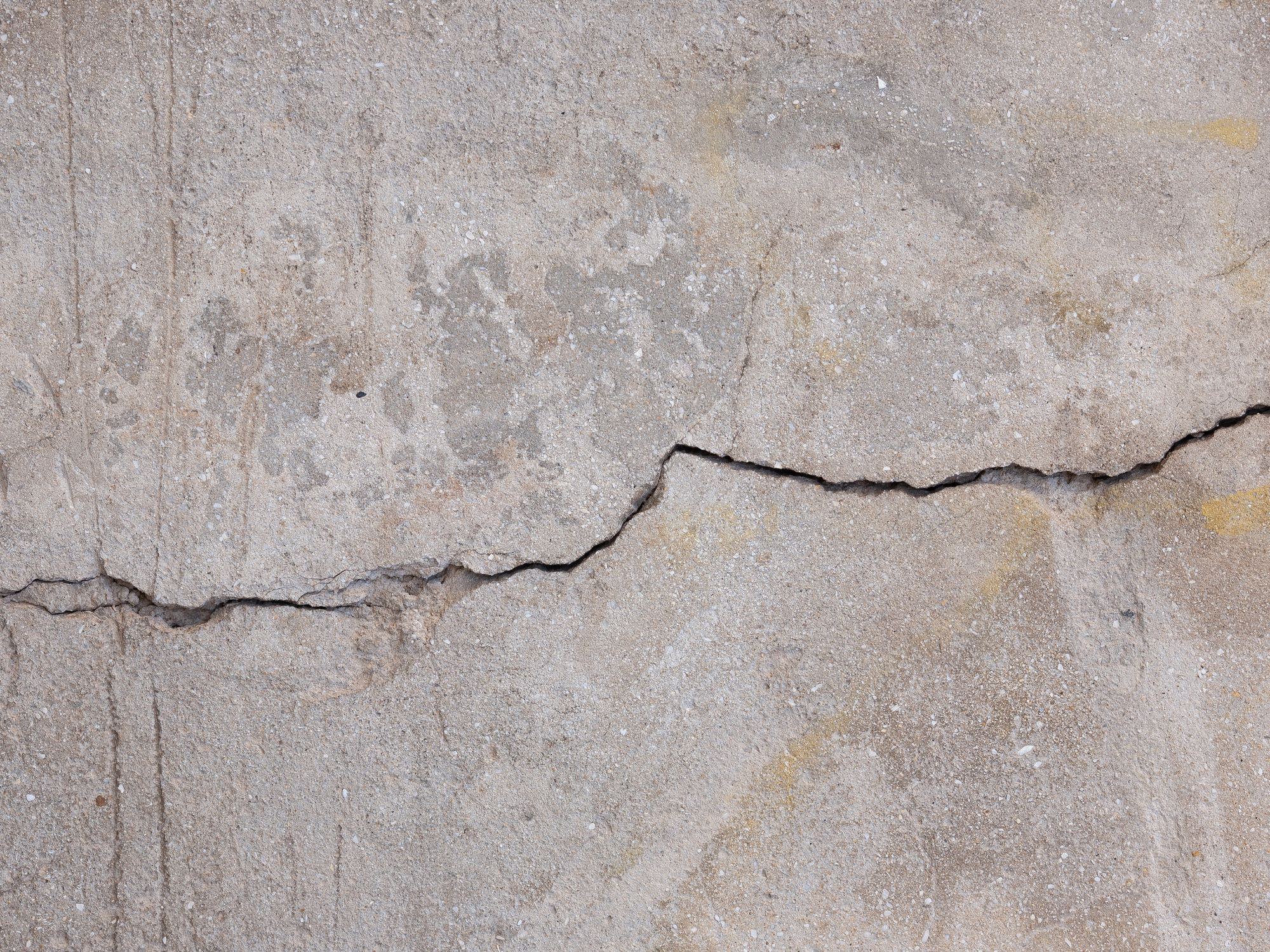
Between the bands of gritstone lie layers of clay. Clay absorbs water and swells; when it dries, it shrinks. This cycle happens every year, but a long dry spell makes the shrinkage severe enough to pull foundations down. New cracks appearing after hot weather usually point to clay behaviour rather than a sudden structural failure.
Trees make the problem worse. Roots draw moisture from the clay far deeper than grass or shrubs do. A mature oak or ash standing close to a house can dry out the soil beneath the footings even during a normal summer. When the tree is removed, the clay rehydrates and swells again, which causes its own kind of movement.
If you notice doors sticking or plaster cracking after a warm period, the clay beneath the house is likely shrinking. Measuring a crack week by week helps track whether the movement is still active or has stopped. Specialist firms use this data alongside soil tests to decide whether [resin injection](/resin-injection-huddersfield) will stabilise the ground or if traditional [mass concrete underpinning](/mass-concrete-underpinning-huddersfield) is needed to reach firmer strata below the clay layer.
Made ground and old industrial fill
Parts of Huddersfield were reshaped during the industrial period. Mills, railways and quarries left behind areas where the natural ground was stripped away and replaced with rubble, slag or loose soil. This made ground compresses over time, especially when heavy loads are placed on it or when water washes finer particles away.
A house built on fill might stand perfectly level for decades, then begin to tilt as the material underneath consolidates unevenly. Sloping floors or gaps opening up around window frames are common signs. Because the fill is unpredictable, repairing foundations here requires careful investigation. Boreholes reveal how deep the loose material goes and what lies beneath it.
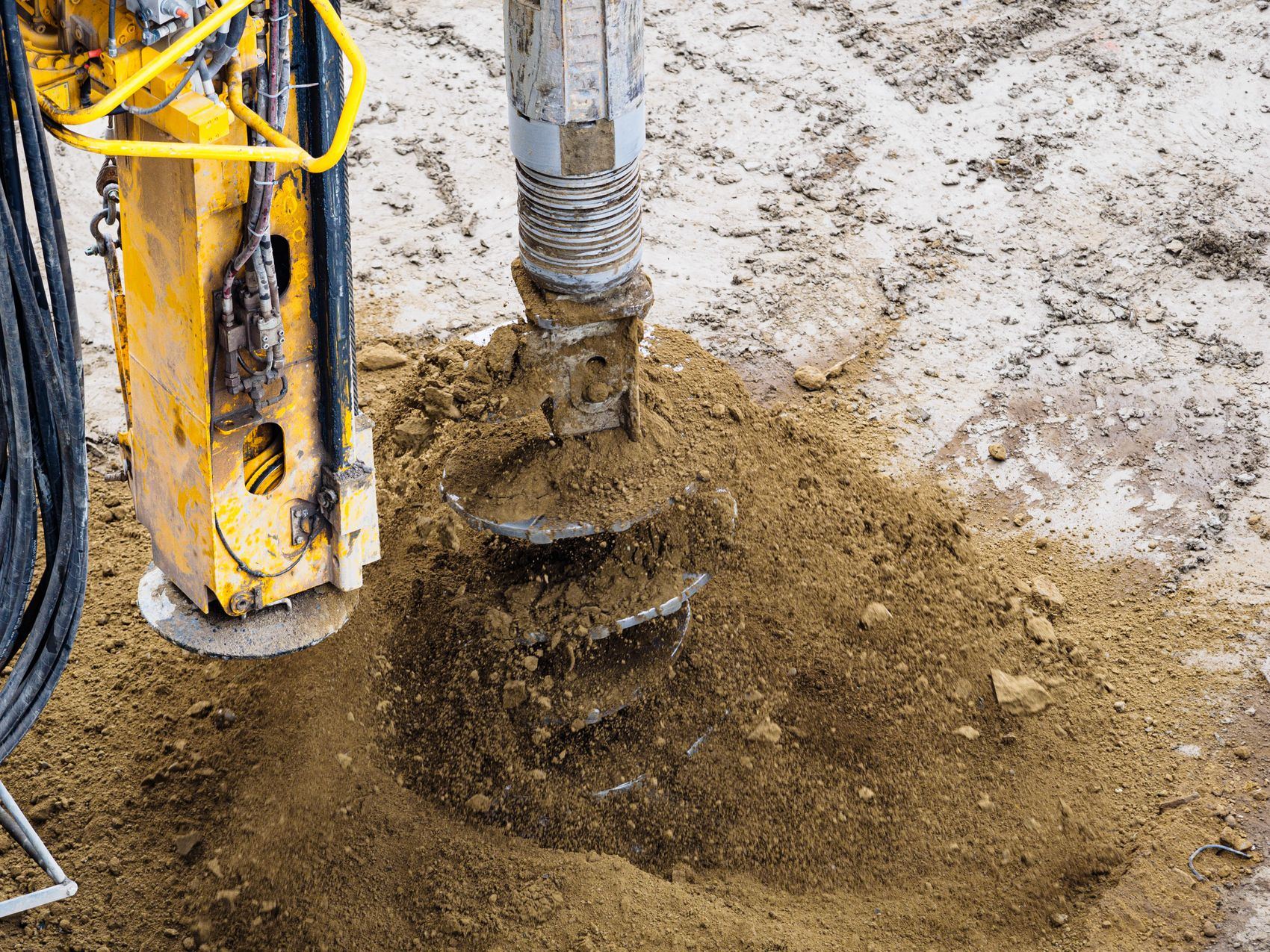
Where access is tight, perhaps between terraced houses or inside a cellar, [mini piled underpinning](/mini-piled-underpinning-huddersfield) allows the specialist contractor to drive piles through the fill into the solid rock below. In basements, [lowering the floor](/basement-underpinning-huddersfield) often means excavating this unstable material entirely and replacing it with reinforced concrete. Understanding the history of the plot helps explain why the ground behaves the way it does now.
Coal measures and mine workings
The same geological period that produced the millstone grit also deposited coal seams across the region. Shallow mining took place for centuries, leaving voids and collapsed tunnels beneath some neighbourhoods. When these old workings shift or flood, the ground above can subside suddenly.
Not every part of Huddersfield is affected, but certain postcodes sit directly over recorded seams. If a homebuyer survey flags possible movement near known workings, the next step is a detailed check against historical mining records. Subsidence caused by mine collapse behaves differently from clay shrinkage. The cracks tend to be wider, and the movement can continue until the void is filled or bridged.
Repairing a house above old workings demands specific methods. [Structural monitoring](/structural-monitoring-huddersfield) tracks whether the ground is still moving while the specialist plans the work. Depending on the depth and condition of the seam, the contractor might grout the void or install deep piles that bypass it entirely. Knowing what lies underground prevents wasted effort and ensures the chosen method addresses the actual cause of the damage.
What the ground means for your repair options
Every underpinning job starts with the soil. The method a specialist contractor chooses depends on what they find beneath the existing footings. Firm rock close to the surface might need only localised [crack repair](/crack-repair-huddersfield) and minor [foundation strengthening](/foundation-repair-huddersfield). Deep clay or thick fill demands more extensive work.
When deciding how to [underpin a subsiding house](/house-underpinning-huddersfield), the contractor weighs the ground conditions against the building's construction. A heavy stone terrace reacts differently from a modern brick semi. Access matters too. Terraced streets in Paddock or Rastrick leave little room for large machinery, so the choice of plant affects what is practical.
Before any work begins, check that the [underpinning contractors](/underpinning-contractors-huddersfield) you are considering understand the local geology. Firms working regularly in Huddersfield know where the clay bands run, which valleys hold made ground and where the old mines are mapped. That knowledge shapes everything from the first borehole to the final sign-off by building control.
Tell us what you have noticed at home
Send a description of the cracks or movement you can see. We take your enquiry and pass it to a specialist firm who deals with ground problems in Huddersfield. There is no charge for this and no obligation to proceed.
- No cost to ask
- No obligation
- Local specialists