Guide
How deep does underpinning go? Depths and ground below
Underpinning depth depends on the ground below the footings, the weight of the house above and what a [subsidence survey](/subsidence-survey-huddersfield) finds. A specialist firm decides where to stop digging based on those factors, and that measurement changes from one street to the next.
Why depth varies from one home to another
There is no standard depth for underpinning. The answer depends entirely on what lies beneath the existing footings. A house built on firm rock needs far less excavation than one sitting on soft clay that shrinks in summer and swells in winter.
The load matters too. A two-storey stone terrace puts more pressure on its foundations than a single-storey extension. The specialist firm calculates how much weight the new concrete or piles must carry before deciding how far down to go.
A [subsidence survey](/subsidence-survey-huddersfield) establishes these facts. Without knowing the soil type, the moisture content and the condition of the current footings, any guess at depth would be unreliable. The survey tells the contractor exactly where stable ground begins.
Finding competent ground below Huddersfield
Huddersfield sits on varied geology. Parts of the town rest on millstone grit, a hard sandstone that provides a solid base relatively close to the surface. Other areas sit on glacial till or shrinkable clay, where stable material may lie several metres down. You can read more about the [ground conditions under local homes](/news/millstone-grit-and-clay-ground-under-huddersfield-homes) to understand why neighbouring streets sometimes need different solutions.
Competent ground is the layer that will not move when the weather changes or when water drains away. The specialist digs until they reach it. Sometimes that means going down 1.5 metres. In other cases, particularly near old valleys or filled land, the excavation goes much deeper.
Old mine workings complicate things further. If coal was extracted nearby, the ground might contain voids that make shallow foundations unsafe. Houses affected by [old coal and quarry sites](/what-you-can-see/old-coal-and-quarry-workings) often require the underpinning to bypass those weak zones entirely.
Mass concrete pins and their typical depths
[Mass concrete underpinning](/mass-concrete-underpinning-huddersfield) involves excavating bays beneath the wall in sequence and filling them with concrete. The depth of each pin matches the distance to competent ground.
In many Huddersfield homes, mass concrete pins range from one to three metres deep. The specialist firm excavates in short sections so the wall above remains supported at all times. Each bay is poured, left to cure, and then packed tight against the existing footing before the next section starts.
This method suits terraced houses and older stone buildings where the walls are thick enough to bridge across the open bays safely. For a closer look at how this applies to local stone construction, see the notes on [underpinning a Pennine house](/news/underpinning-a-stone-built-pennine-house-and-footings). The depth stays dictated by the soil report rather than a fixed rule.
When mini piling reaches much deeper
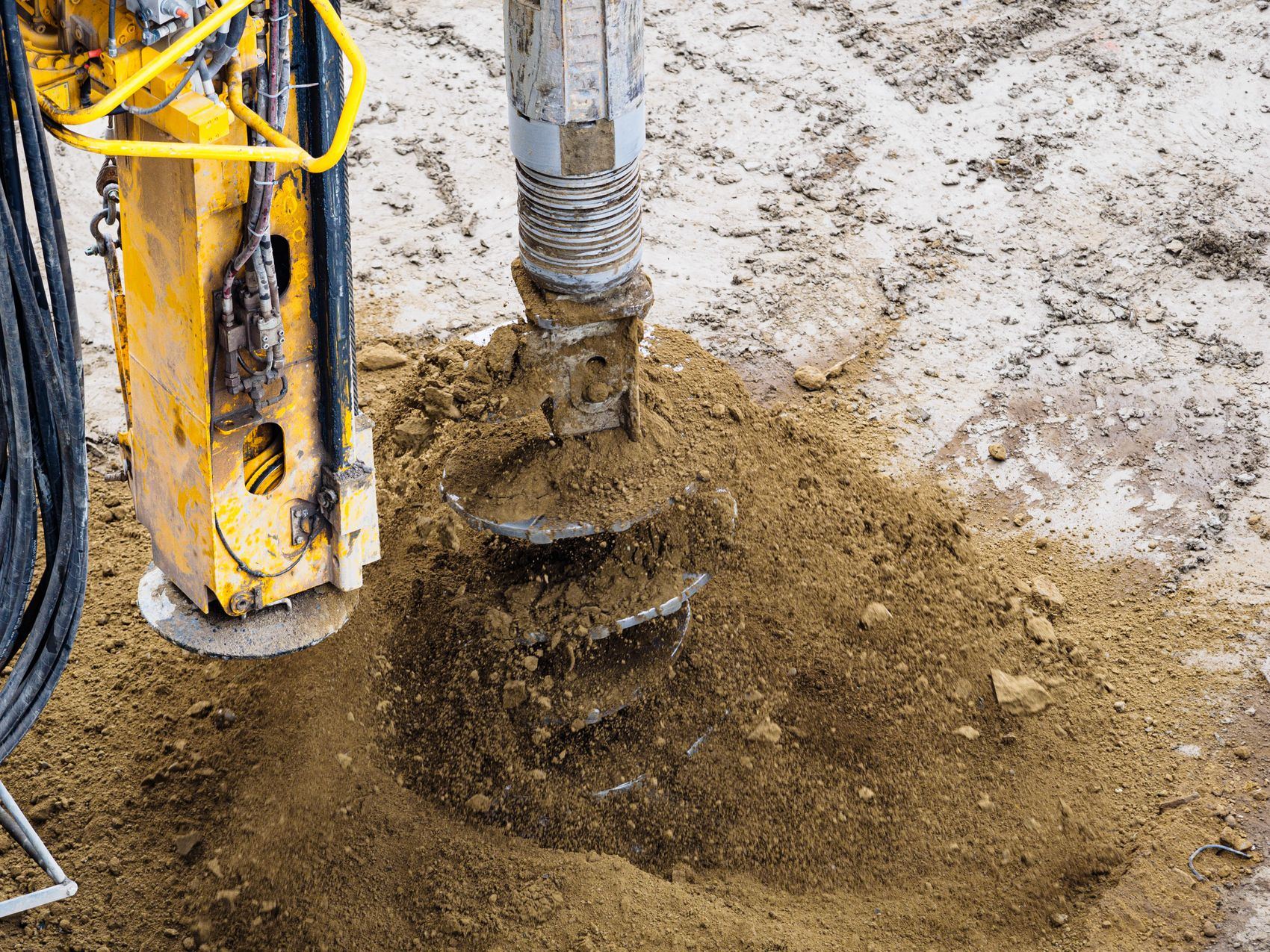
If stable ground lies beyond the practical limit of mass concrete, the specialist uses [mini piled underpinning](/mini-piled-underpinning-huddersfield). Piles are driven or bored through weak soil until they bear on rock or a dense stratum. These can extend five, ten or even fifteen metres below the surface.
Mini piles suit sites where the ground is too soft for open excavation or where access is restricted. Small rigs fit through narrow side passages common in older parts of the town. The pile transfers the load of the house past the problem layers to something that will not shift.
Because the equipment is compact, piling works well for extensions and rear additions where large machinery cannot reach. The depth here is determined by the engineer's calculation of skin friction and end bearing, not by how deep a person can safely dig a trench.
Basement work and lowering the floor level
[Basement underpinning](/basement-underpinning-huddersfield) follows a different logic. Here the goal is often to deepen an existing cellar so it becomes usable living space. The specialist excavates below the current floor slab in controlled stages, extending the walls downward.
Depth in this case is set by the homeowner's requirements and the structural limits of the building. Going too far risks undermining adjacent properties or hitting the water table. Groundwater is a particular concern in lower parts of the valley, where the water table rises after heavy rain.
The contractor installs temporary supports while pouring new concrete sections. Each stage must cure fully before the next begins. Because the work happens inside an occupied structure, monitoring movement throughout the project keeps everything safe.
How the survey sets the final measurement
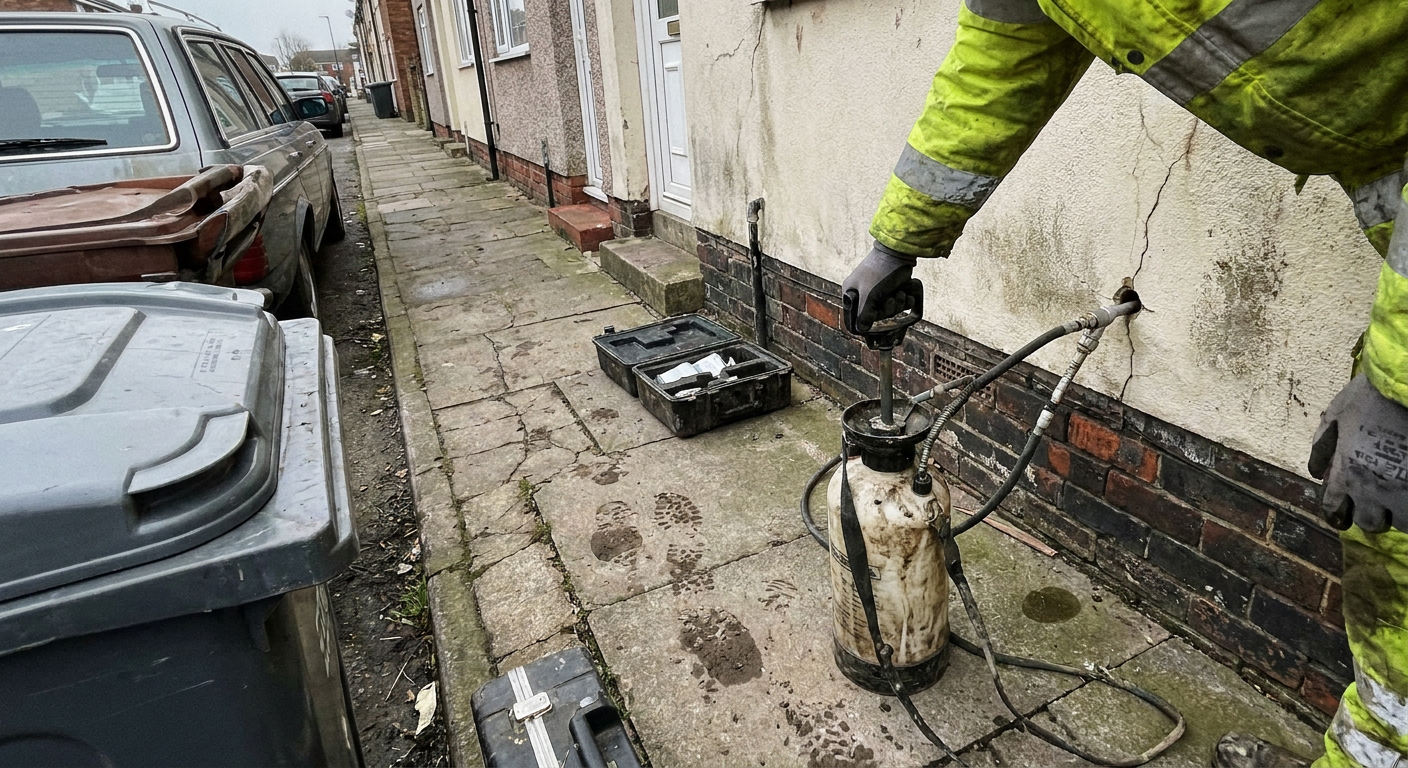
Before any digging starts, the specialist firm reviews the findings of the [subsidence survey](/subsidence-survey-huddersfield). That report details soil samples, trial pit results and the pattern of damage visible in the house. Cracks that follow mortar joints in a stepped pattern point to one type of movement; vertical splits suggest another. Understanding [what stepped cracks mean](/what-you-can-see/stepped-cracks-brickwork-huddersfield) helps the engineer judge how far the foundation has dropped.
Trial pits dug beside the house reveal exactly where the current footings end and what material sits beneath them. If the trial pit shows firm clay at two metres, the design reflects that. If it shows loose fill continuing past four metres, the plan changes to piling.
[Structural monitoring](/structural-monitoring-huddersfield) sometimes precedes the decision. Glass tell-tales or electronic gauges track whether a crack is still widening. If movement has stopped, deep underpinning might be unnecessary. If it continues, the survey data dictates precisely how far down the repair must go.
Ask about the ground under your home
Send a description of what you have noticed. It goes to someone who handles local subsidence enquiries and does not commit you to any work or cost.
- No obligation to proceed
- Local knowledge applied
- Plain answers given